Sustainability Leadership Roundtable Munich: Turning Sustainability Ideas into Real Business Value
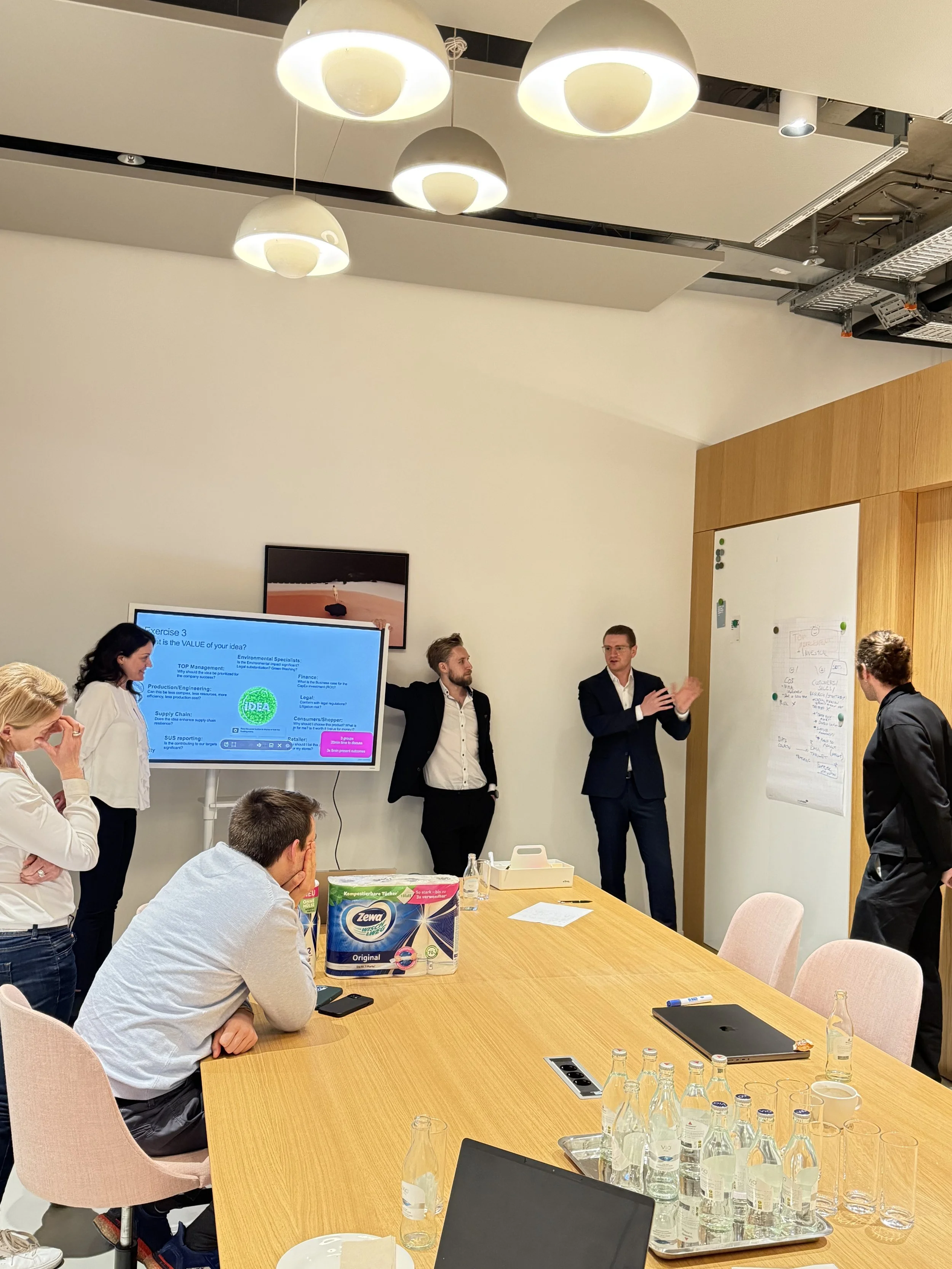
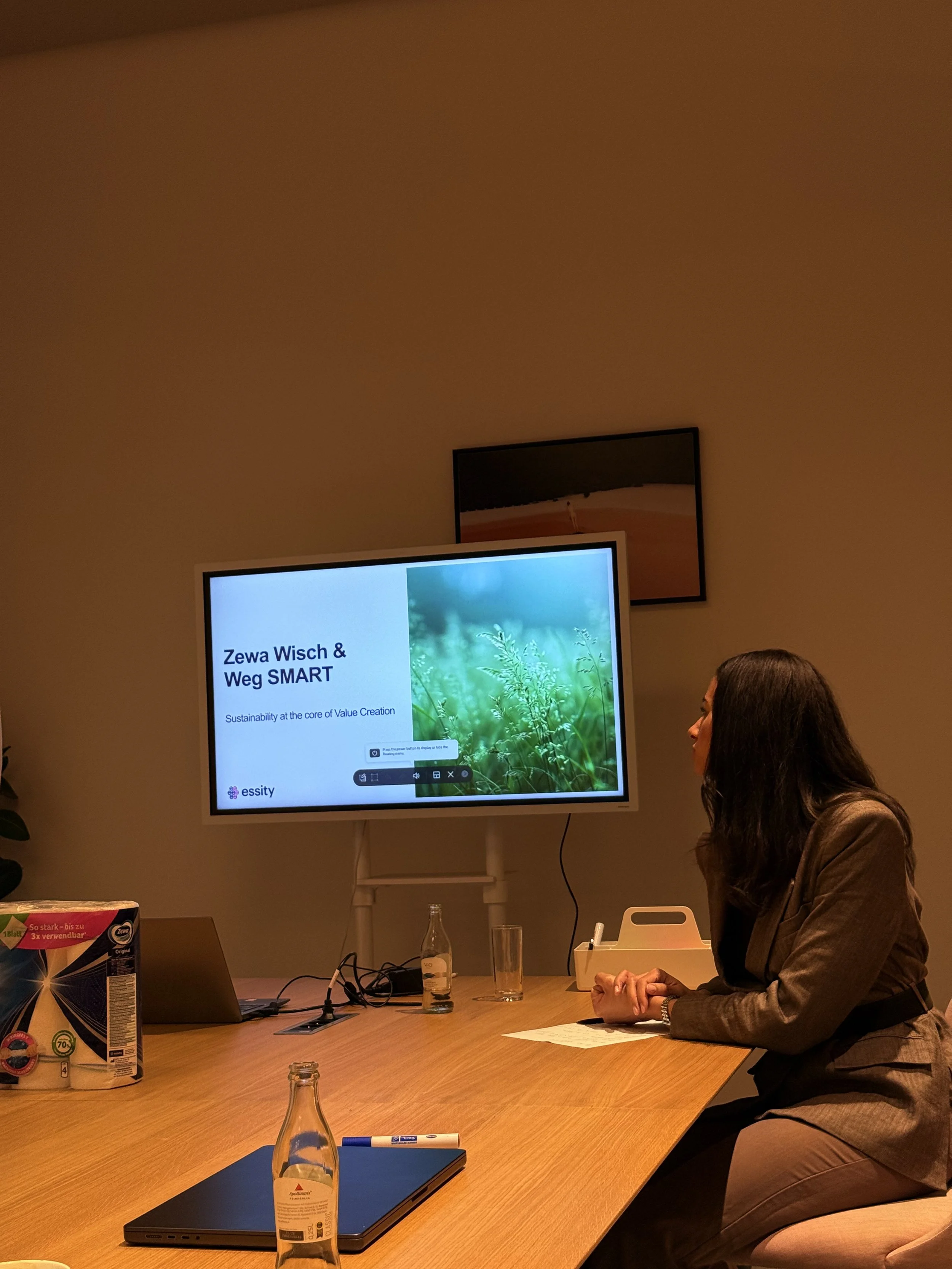
On 22 April, Footprint Intelligence hosted another edition of the Sustainability Leadership Roundtable in Munich — a monthly exchange format for sustainability leaders who want to discuss current challenges, practical approaches and the future role of sustainability in business.
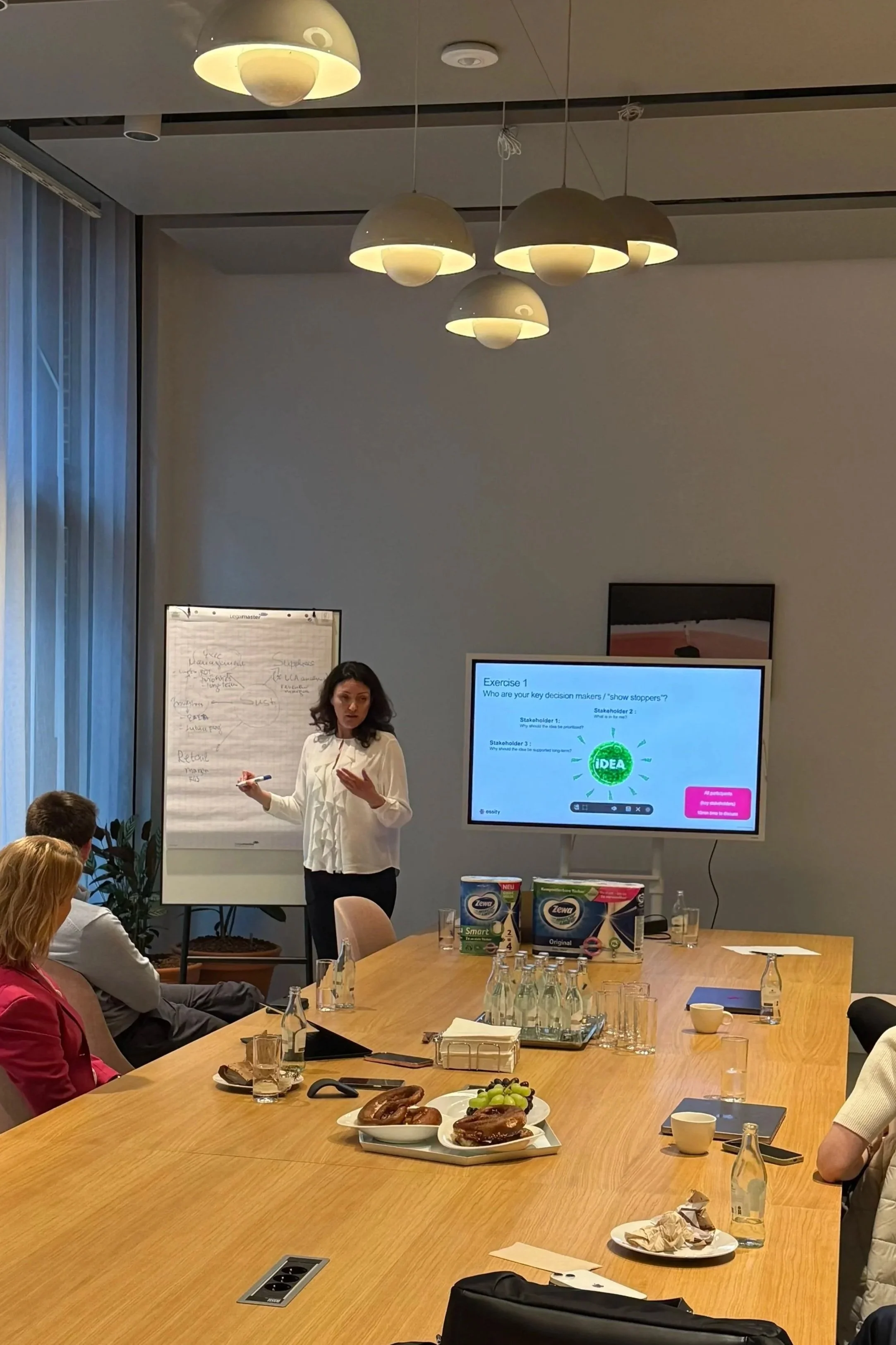
The evening brought together a selected group of sustainability professionals for networking, strategic exchange and an interactive workshop led by Vanya Boneva, Sustainability Lead Central & East and Regional Marketing Manager HHT Central & East at Essity. Her session focused on one of the most relevant questions for sustainability teams today: How can a strong sustainability idea move from intention to real implementation — and create measurable value for the business?
A monthly space for honest sustainability exchange
The Sustainability Leadership Roundtable is designed as a regular format for sustainability leaders to step away from day-to-day reporting pressure and discuss the broader strategic questions shaping their work. While sustainability teams are often deeply involved in regulatory requirements, data collection, carbon accounting, stakeholder requests and internal coordination, the roundtable creates space for a different kind of conversation: how sustainability can become a driver of resilience, competitiveness and long-term value creation.
From the substitutes’ bench to the playing field
One of the core images of the workshop was the question: How can sustainability move from the substitutes’ bench to the playing field? This metaphor captured a challenge many sustainability professionals know well. Sustainability is often recognized as important, but it is not always fully integrated into core business decisions. Good ideas exist, teams are motivated, and the environmental case may be clear — yet implementation still depends on budgets, internal priorities, commercial realities and organizational buy-in.
Vanya framed this as both an environmental and an organizational challenge. On the one hand, the need for action is urgent: climate change, resource pressure and planetary boundaries demand speed and scale. On the other hand, organizations often need time. Political uncertainty, changing management priorities, complex regulation, competing business needs, long-term investment requirements and unclear consumer willingness to pay can all slow down sustainability initiatives.
The key message was clear: sustainability leaders cannot rely on environmental relevance alone. To move ideas forward, they need to understand what matters to each stakeholder and translate sustainability into the language of value.
Sustainability needs strong buy-in from Key Stakeholders
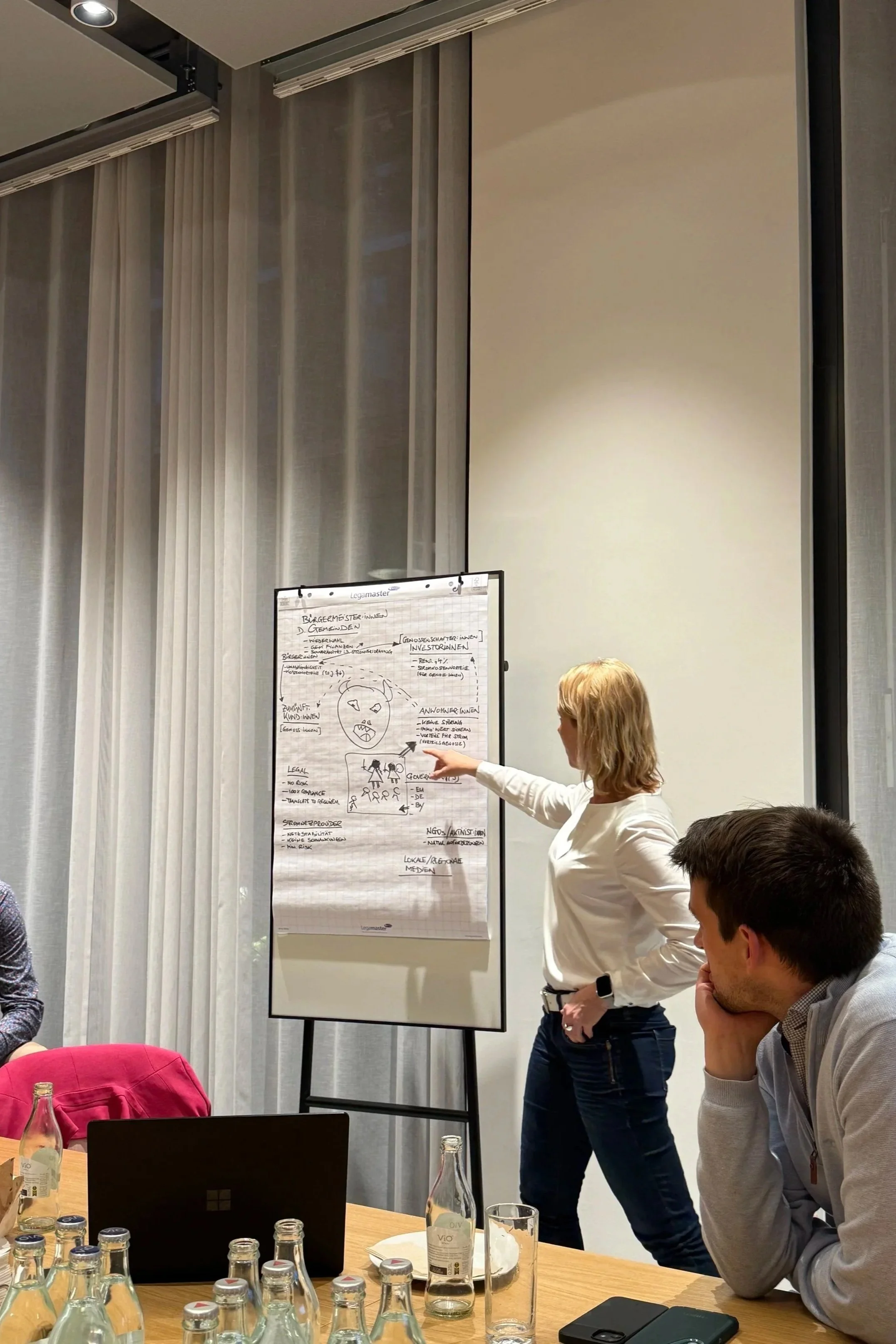
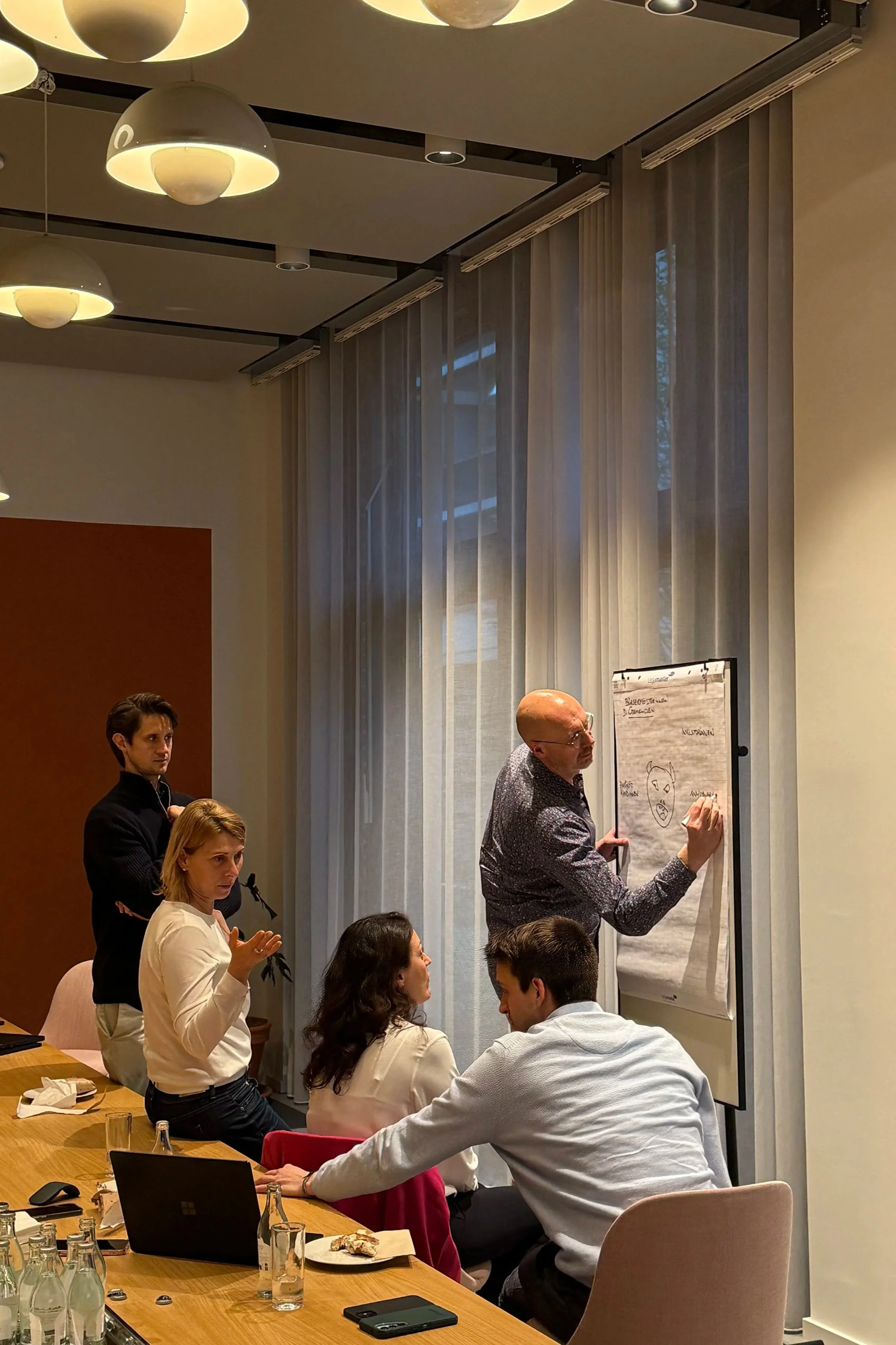
A central part of the workshop focused on stakeholder engagement. Participants were asked to think about a sustainability idea and identify the key stakeholders who could either enable it or block it. This included finance, top management, legal, production, engineering, supply chain, sustainability reporting, environmental specialists, consumers, shoppers and retailers.
This exercise reflected a reality that many sustainability teams face: the sustainability department rarely implements transformation alone. A project may need approval from finance, validation from legal, support from production, data from supply chain, alignment with reporting targets and a convincing commercial argument for management. Each stakeholder has different priorities, concerns, and success metrics.
For finance, the relevant question may be whether the idea has a competitive ROI. For top management, it may be whether the initiative supports long-term sustainable growth and profit. For production teams, it may be whether complexity, resource needs or costs can be reduced. For legal teams, it may be whether claims are substantiated and risks are controlled. For sustainability reporting, the question may be whether the initiative contributes meaningfully to company targets.
This shift in perspective is essential. A sustainability idea becomes stronger when it is not only “good for the environment,” but also meaningful for the people who need to approve, support and implement it.
Speaking the language of value
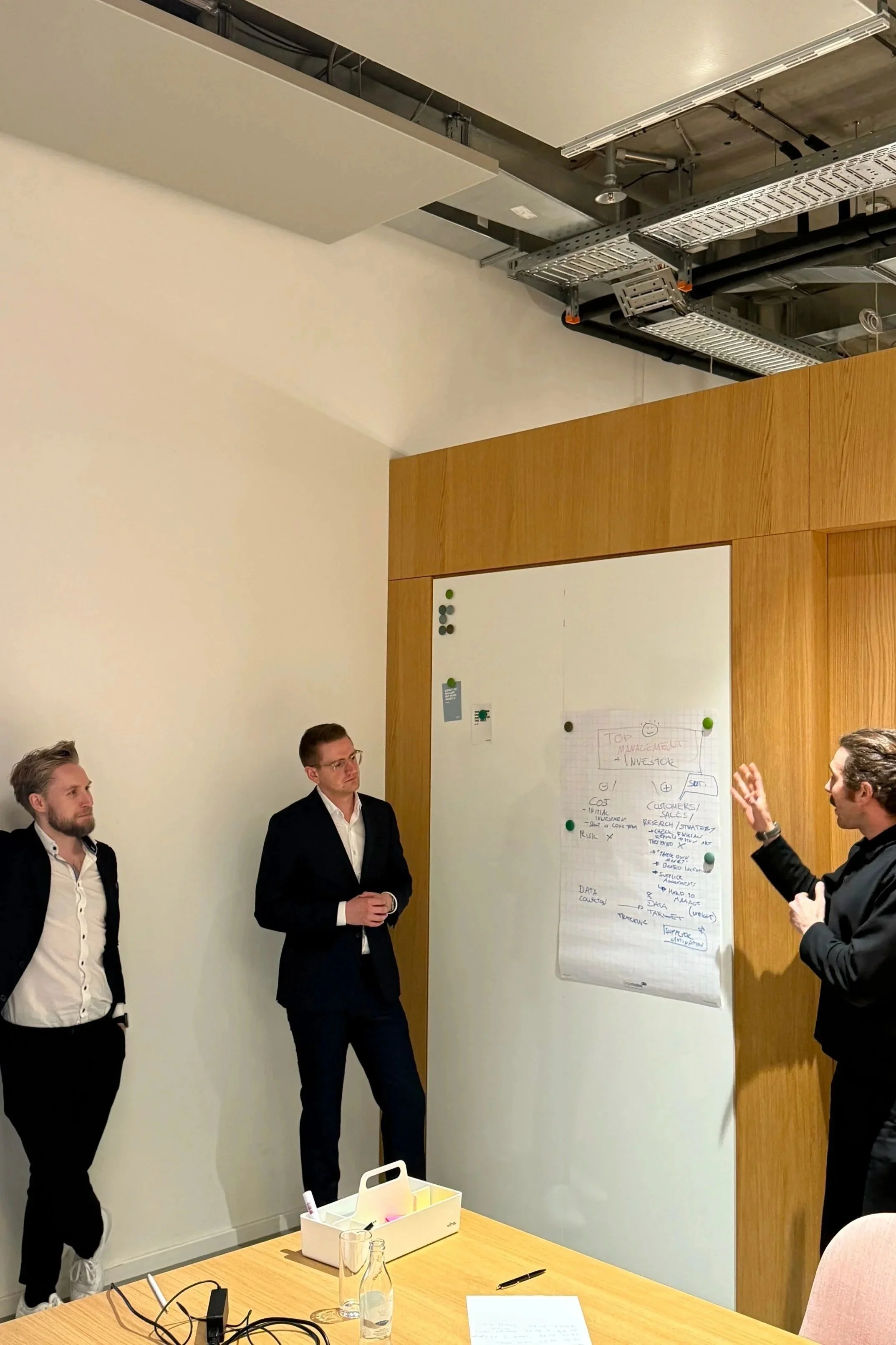
One of the strongest takeaways from the evening was that value creation speaks many languages. Sustainability leaders need to learn which KPIs matter to which stakeholder. A single initiative can create different types of value depending on the audience.
For example, innovation may reduce waste and emissions, but that is only part of the story. It may also impact brand equity, production processes, logistic cost, regulatory requirements etc. The same idea can therefore be translated into multiple value arguments.
This is especially important in a market-based economy. Sustainability initiatives compete with other priorities for attention, budget, and resources. To make them happen, sustainability teams need to connect environmental benefits with business relevance. The workshop encouraged participants to move from a purely technical or reporting-driven view of sustainability toward a broader value-chain perspective.
The Essity example: sustainability at the core of value creation
Vanya illustrated the approach with the example of Zewa Wisch & Weg Smart, a coreless kitchen towel innovation from Essity. The product example showed how a sustainability idea can become compelling when it creates value along the value chain.
The concept combines several sustainability and business benefits: no cardboard core, less waste, twice as many towels on each roll, less frequent replacement, smaller packaging, strong product quality and a reported reduction of CO₂ emissions. The example also showed how sustainability can support consumer relevance and production investment.
Instead of having sustainability as a separate add-on, the case demonstrated how environmental improvement can be embedded into product design, business logic and market positioning. In that sense, the idea was not only about reducing environmental impact; it was about creating value for consumers, retailers, Essity, and the environment at the same time.
From great idea to action plan
The practical structure of the workshop helped participants move from inspiration to application. The process was simple but powerful: start with a sustainability idea, identify the relevant decision makers, understand their KPIs, and define the value argument that makes the idea worth supporting.
This approach is especially relevant for sustainability leaders who need to build internal momentum. Many companies already have strong sustainability ambitions, but the challenge lies in translating them into projects that receive budget, ownership and long-term support. An idea becomes more likely to succeed when it answers the questions each stakeholder is already asking: Why now? Why this project? What is the benefit? What is the risk of not acting? How does it support our goals?
The workshop made clear that sustainability leadership is not only about expertise in regulation, carbon accounting or reporting frameworks. It is also about communication, stakeholder mapping, business understanding and the ability to build coalitions across the organization.
Why this conversation matters now
The timing of the discussion could hardly be more relevant. Many sustainability teams are currently navigating a complex environment. Regulatory requirements are evolving, reporting expectations are increasing, and companies are under pressure to prove that sustainability work creates measurable value. At the same time, organizations are scrutinizing budgets and asking for clearer business cases.
This creates both a challenge and an opportunity. Sustainability can remain stuck in reporting mode, or it can become a strategic function that helps organizations reduce risks, identify efficiencies, strengthen resilience, and unlock new forms of value. The difference often lies in whether sustainability teams can connect their work to the priorities of the wider business.
That was the core message of the evening: sustainability does not become influential by staying isolated. It becomes powerful when it is connected to finance, operations, strategy, legal, consumer, product development, customer, and supply chain value.
Building a stronger sustainability leadership community
Beyond the workshop itself, the roundtable also showed the importance of peer exchange. Sustainability leaders often face similar challenges, but they do not always have enough opportunities to discuss them openly with others in comparable roles. The Munich roundtable created a setting where participants could exchange perspectives, test ideas and learn from each other’s experiences in a trusted environment.
The evening closed with finger food, networking and continued conversations — exactly the kind of informal exchange that often leads to the most valuable insights.
A final thought
Vanya ended the workshop with a powerful question: If not us, then who? And if not now, then when?
For sustainability leaders, this question captures both the urgency and the responsibility of the role. The work is complex, and implementation is rarely straightforward. But the path forward is becoming clearer: sustainability ideas need allies, KPIs, business relevance and a strong value.
The Sustainability Leadership Roundtable in Munich showed that sustainability leadership today is not only about knowing what needs to change. It is about making change happen — inside real organizations, with real stakeholders, under real business conditions.