Business Breakfast: Turning Sustainability Challenges into Business Opportunities
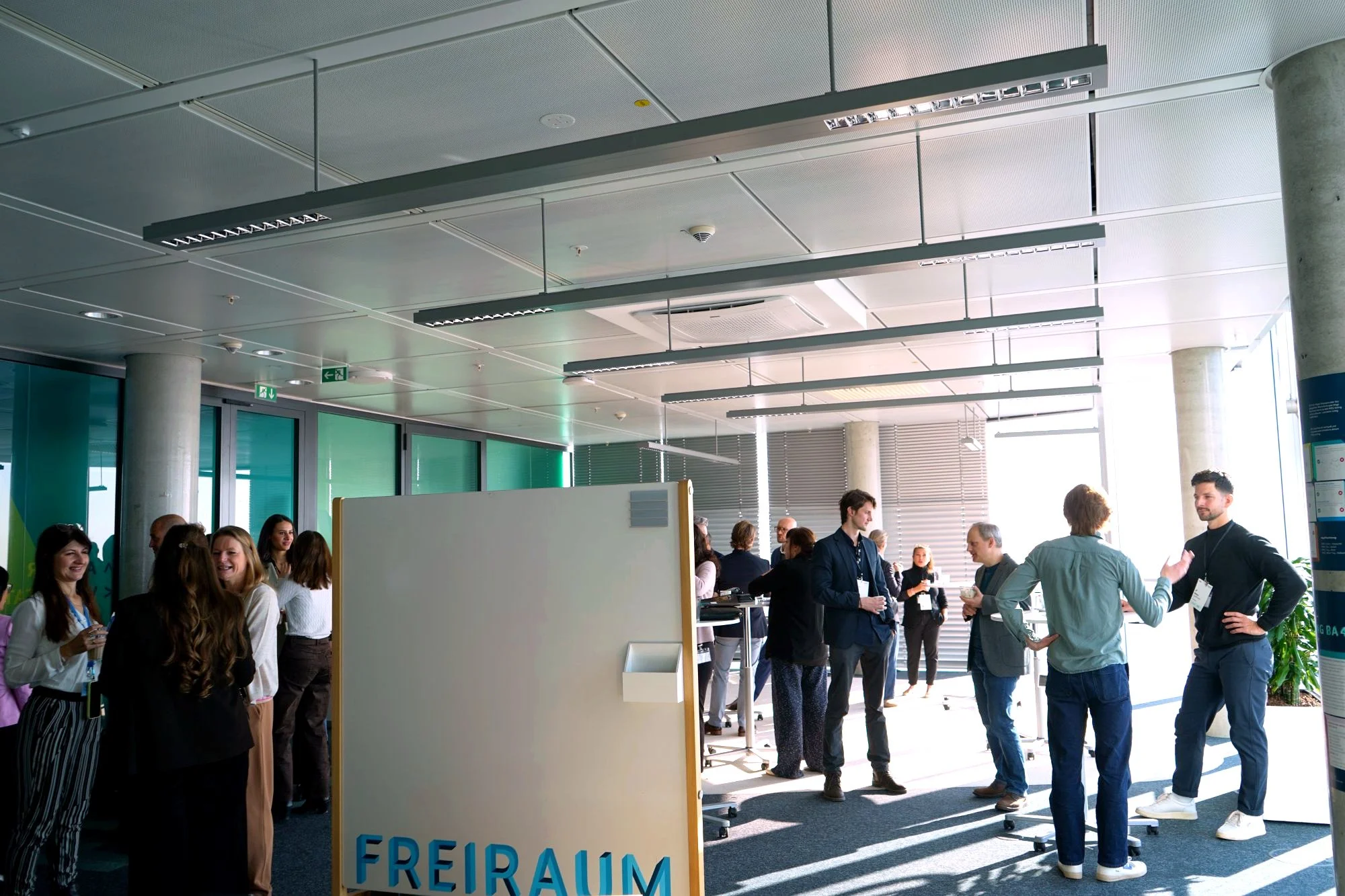
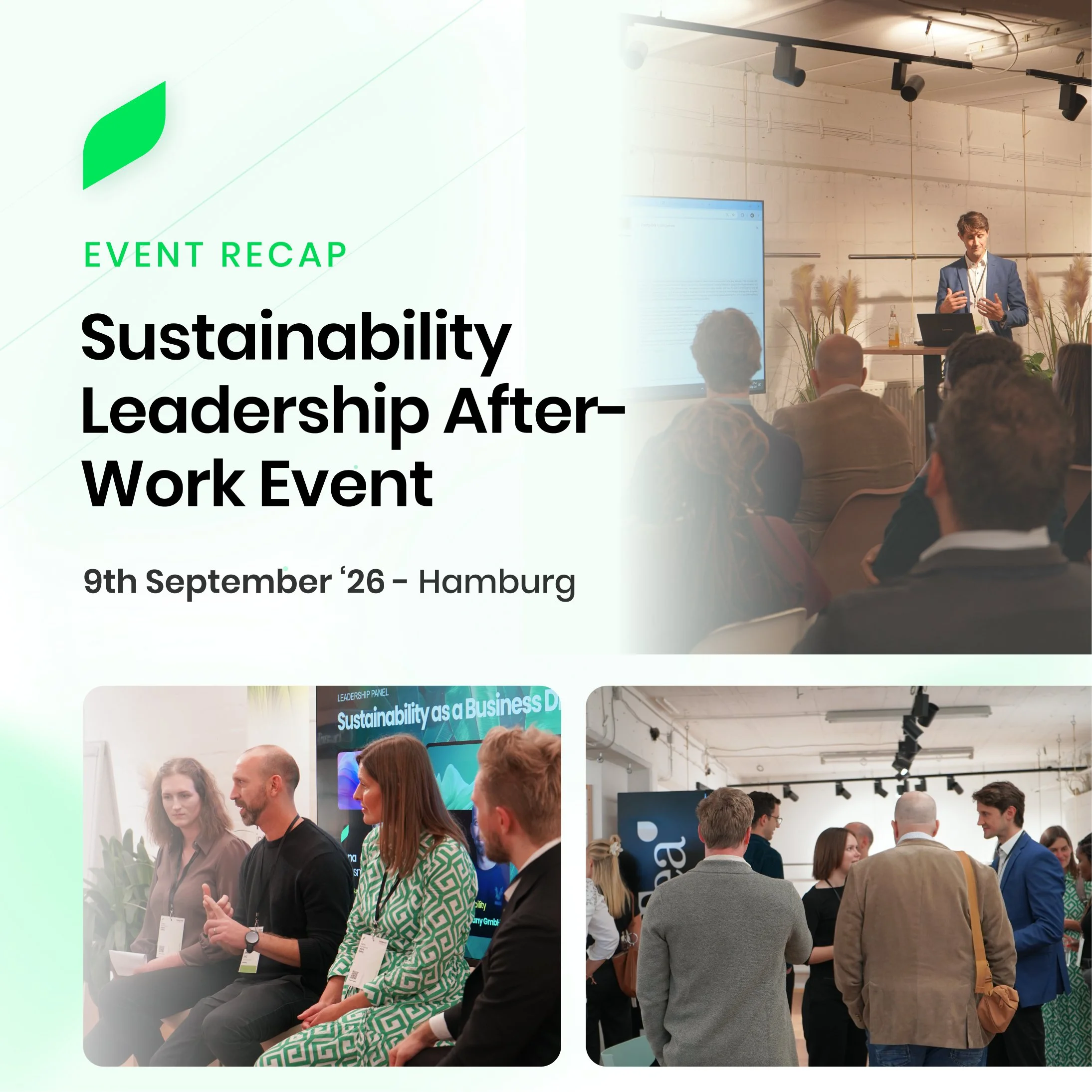
Our first Business Breakfast by Footprint Intelligence was a real success.
With more than 25 participants from both manufacturing and non-manufacturing companies, the event brought together decision-makers and experts from Operations, Supply Chain, Procurement, Compliance, Sustainability, ESG, and C-level and founder roles. The goal was simple: to create a space where peers could openly discuss today’s business challenges, gain practical input, and explore tangible solutions together.
What made the morning especially valuable was the mix of perspectives. Participants did not just talk about sustainability in theory. They discussed the very real operational, regulatory, and commercial pressures companies are facing right now, and how these challenges can be turned into opportunities for resilience, efficiency, and growth.
A format built around real business challenges
The event was structured into three parts:
1. Introduction and issue mapping
We started by identifying the current pain points companies are dealing with across their organizations.
2. Inspiration and case studies
Experts from EY, CrateDB, Footprint Intelligence, and others shared practical insights, real-life examples, and impactful measures already delivering results.
3. Opportunity mapping
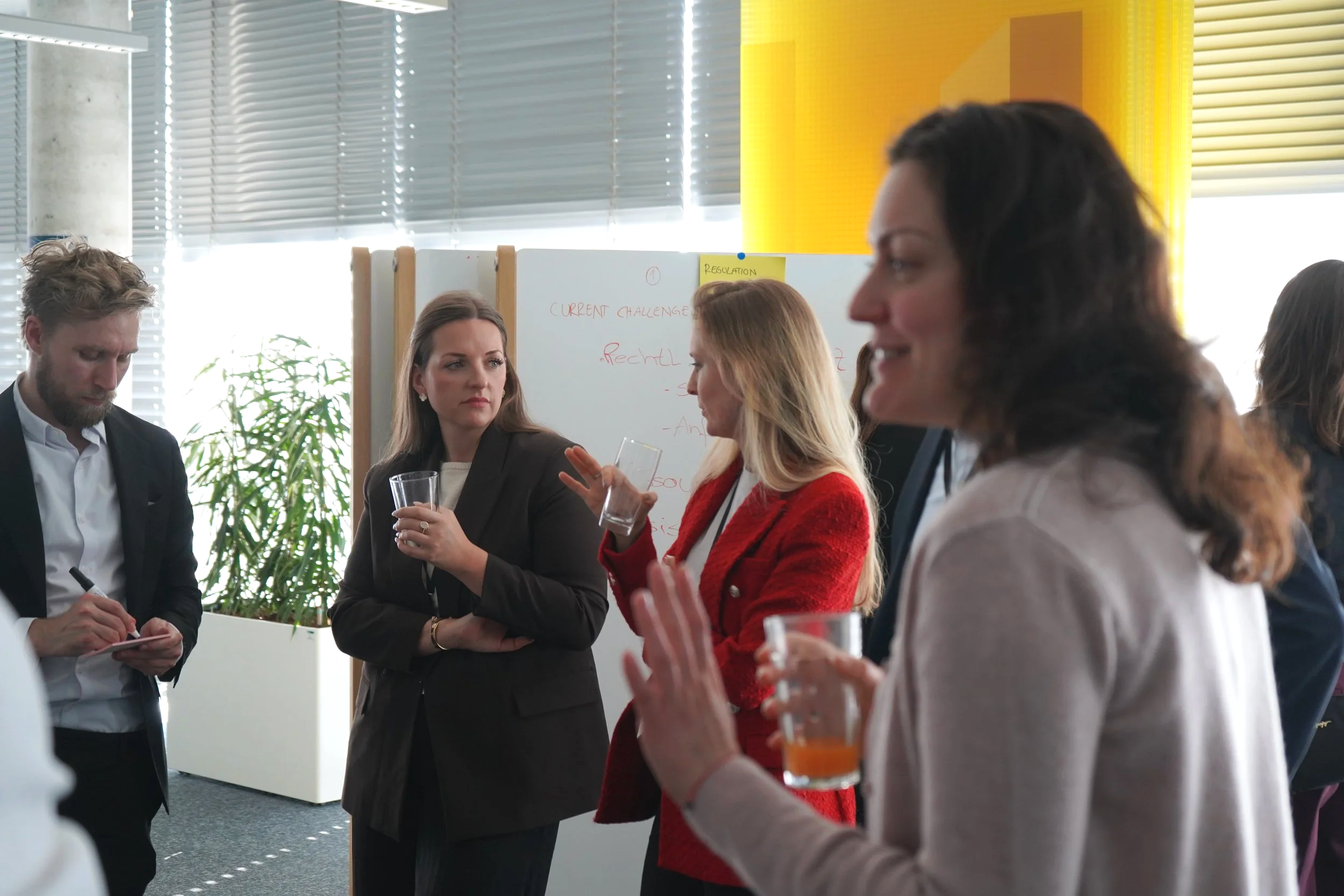
In interactive working groups, participants translated challenges into potential business actions and innovation pathways.
1. Issue Mapping: The seven key pain points companies are facing today
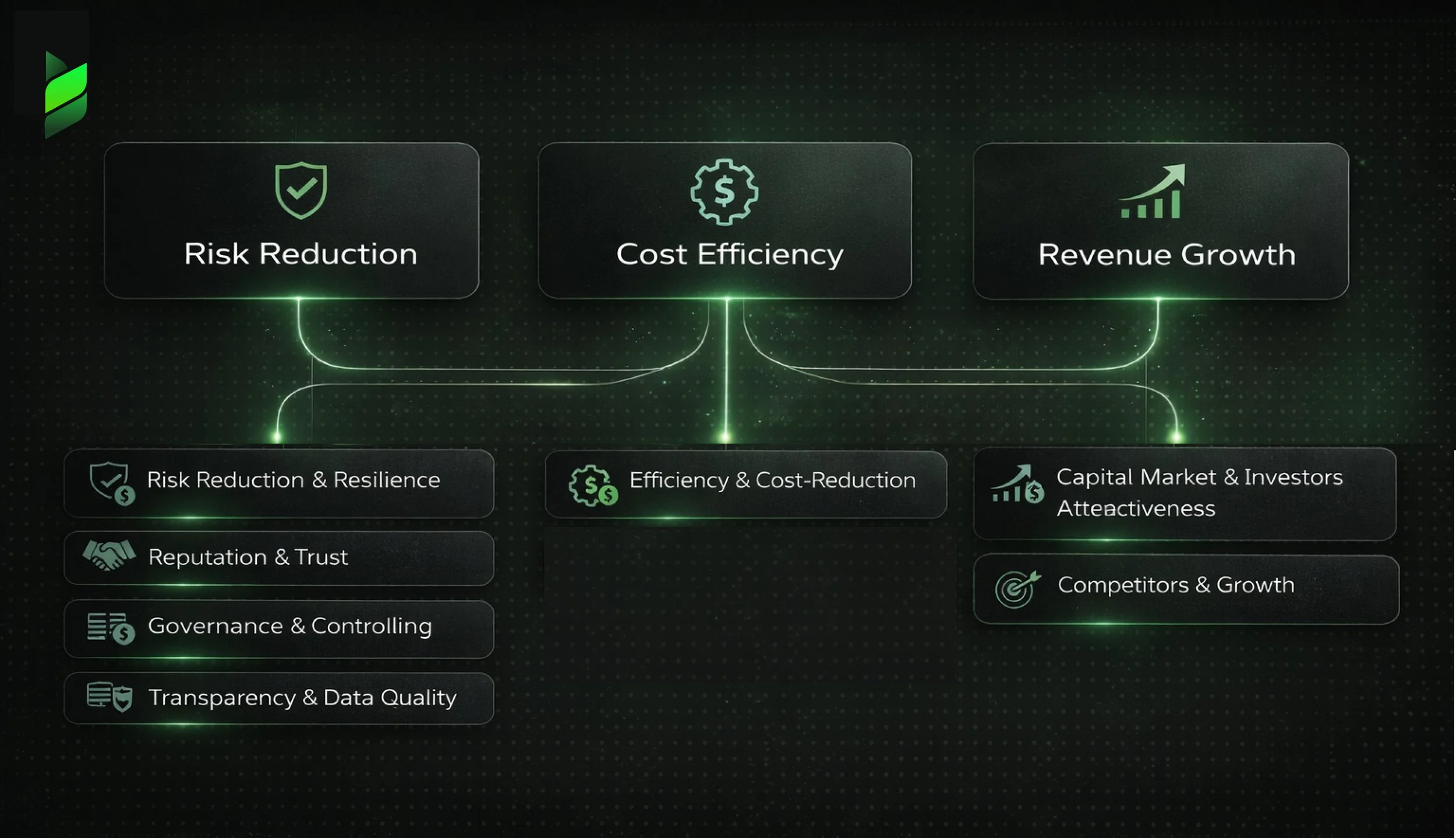
To structure the discussion, we developed a problem map covering seven major pain points across the dimensions of risk reduction, cost efficiency, and revenue growth:
Risk reduction and resilience
Reputation and trust
Governance and controlling
Transparency and data quality
Efficiency and cost reduction
Capital market attractiveness, investors, and stakeholders
Competitors and growth
Across the room, several themes came up repeatedly: regulatory uncertainty, poor data quality, lack of transparency in supply chains, rising cost pressure, and the challenge of turning sustainability requirements into clear business value.
2. Inspiration and case studies: Practical insights from leading experts
The second part of the event focused on practical inspiration and real-world applications of AI and sustainability.
CrateDB: Turning AI into real business impact
CrateDB showed how AI and data infrastructure can improve operations using the example of RAUCH.
By combining production and SAP data through an IoT platform, the company achieved clear business benefits:
Higher equipment effectiveness
Reduced waste
Faster error resolution
Better data access
Fewer warranty claims
Stronger regulatory compliance
The key message: AI creates value when it is built on the right data foundation and linked to real operational use cases.
EY: Regulatory overview and ESG compliance
EY outlined the current regulatory landscape and explained why companies need to act now.
Despite policy adjustments such as Omnibus, EU and national sustainability regulations remain relevant. Frameworks such as CSRD, EmpCo, and CSDDD will continue to shape business decisions.
Key reasons for action include investor expectations, legal and financial risks, customer requirements, and reputational pressure.
The main takeaway: stronger ESG data maturity helps companies move from compliance to strategic value creation.
Footprint Intelligence: From compliance to business impact
Footprint Intelligence shared case studies showing how sustainability, supported by software and AI, can reduce risk, improve efficiency, and support growth.
A major challenge in many organizations is still data collection. Software, automation, and AI can reduce this burden and free teams to focus more on impact.
The central message: sustainability is not just a compliance exercise. When integrated into business strategy, it becomes a driver of resilience, efficiency, and growth.
One especially relevant case study focused on green claims regulation. As requirements increase, companies need to substantiate claims across packaging, advertising, and sales channels.
The solution presented: AI-supported sustainability and legal guidance (agents) that helps teams act faster, reduce risk, and free legal experts to focus on critical cases.
3. Opportunity mapping: from challenge to action
In the final session, participants worked in four groups:
Supply Chain and Costs
Data and AI
Regulation
Growth and Innovation
Each group reflected on two questions:
What is your current challenge?
Which measures have already worked, and which new pathways could be effective?
The discussions were highly practical.
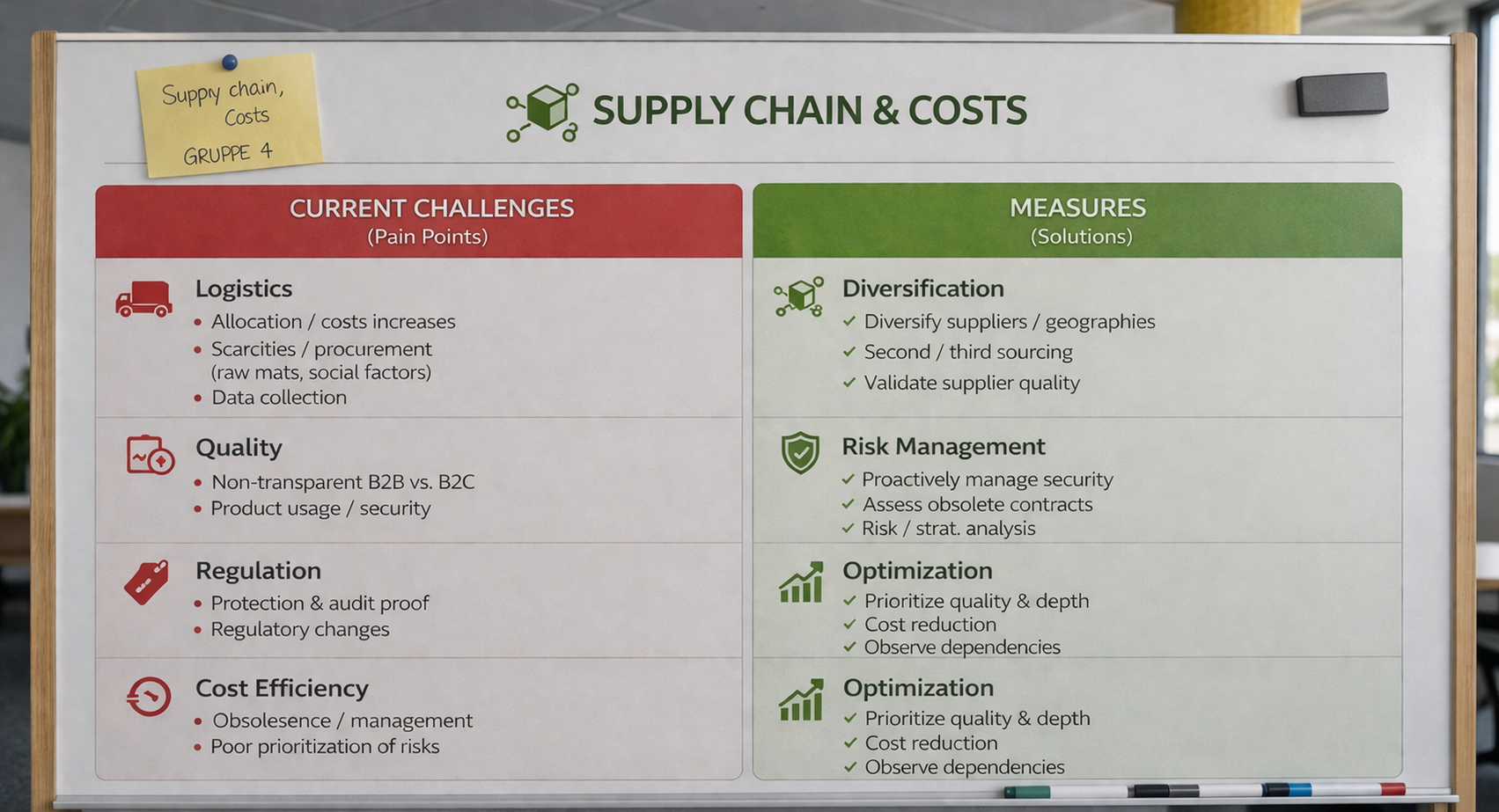
Supply chain group focused on resilience, quality assurance, sourcing diversification, and rising cost pressure.
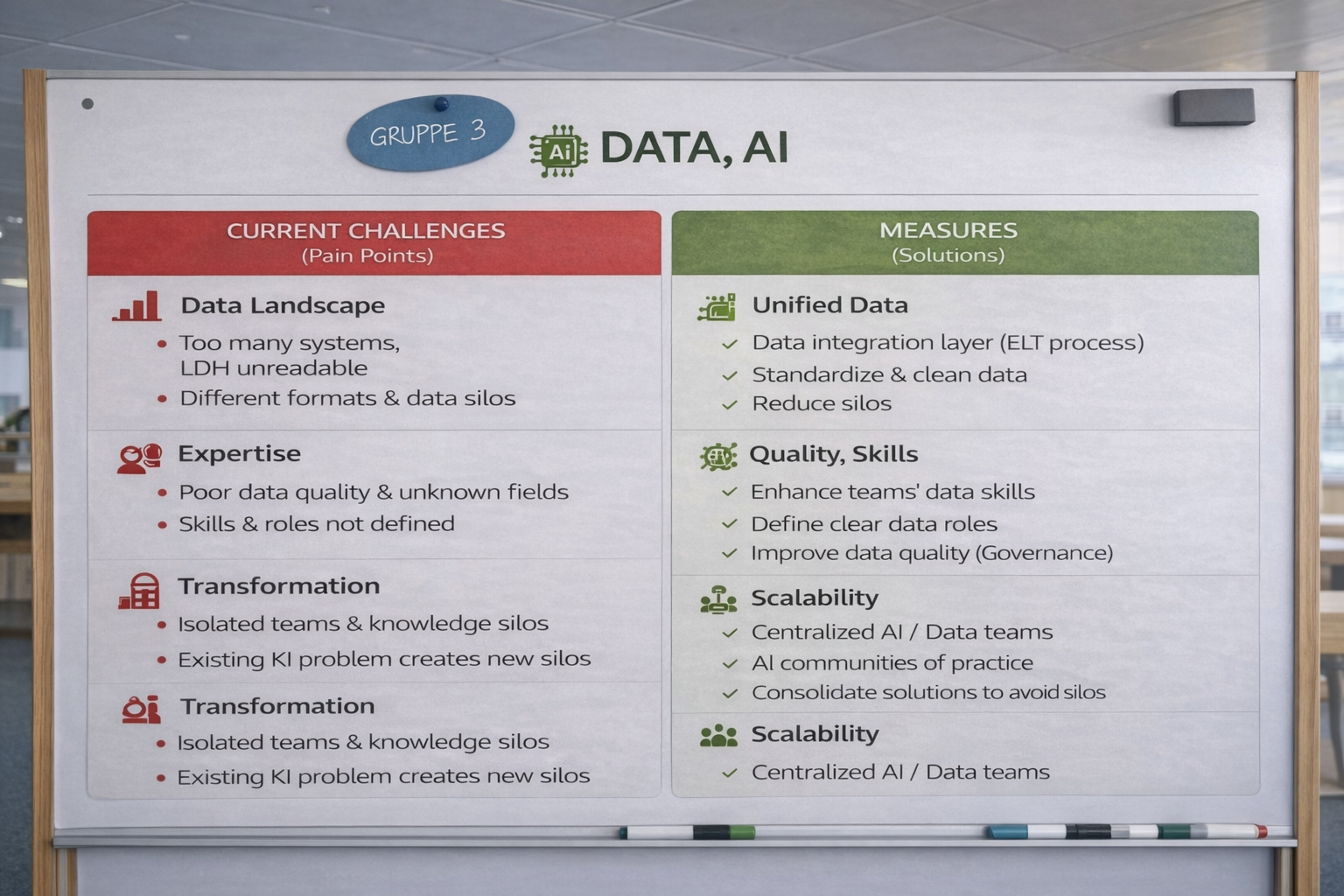
Data and AI group highlighted fragmented systems, inconsistent data formats, poor data quality, and unclear ownership.
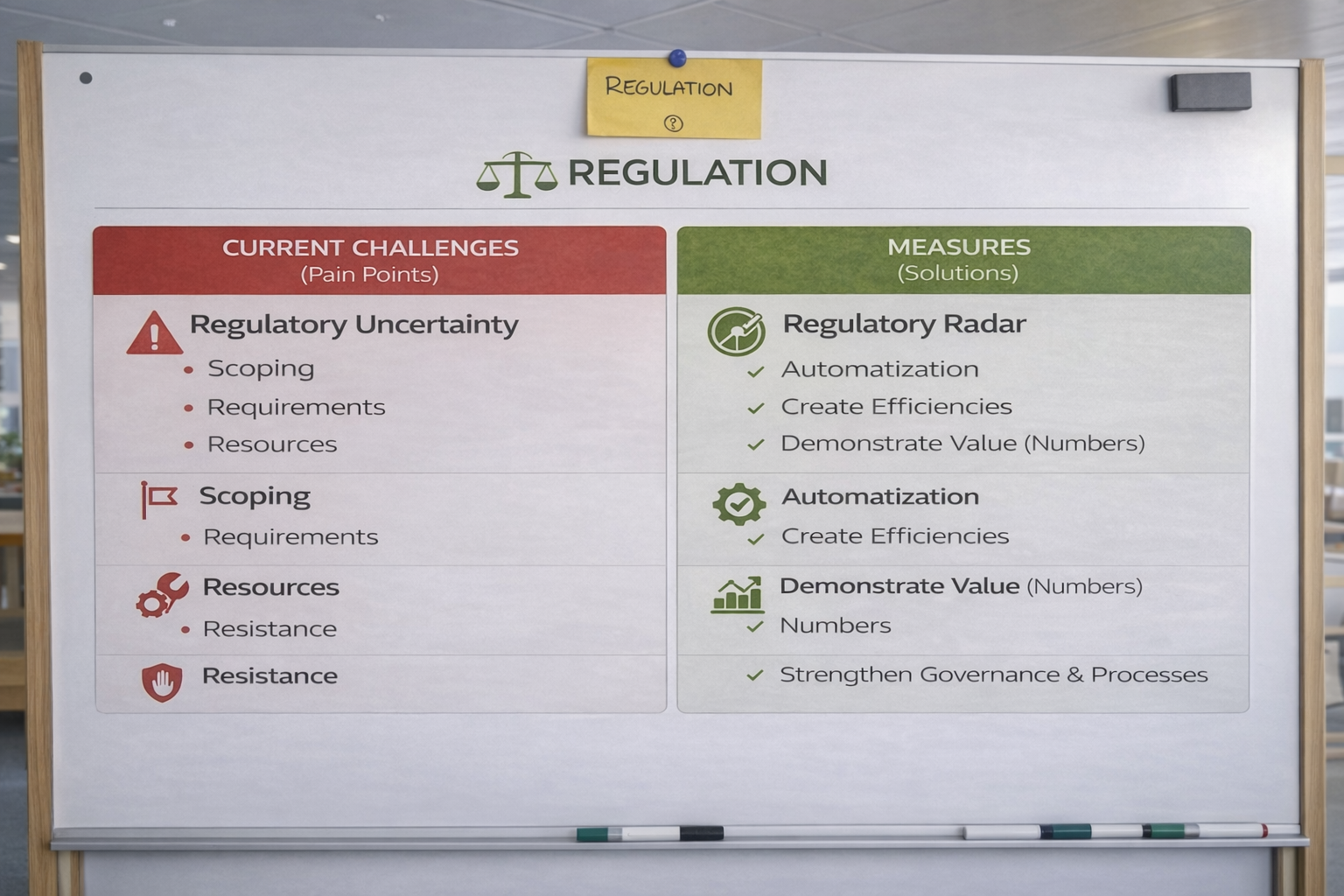
Regulation group spoke about uncertainty, changing requirements, and internal resistance.
Growth and innovation group explored how sustainability can become a driver of new business models rather than just a compliance task.
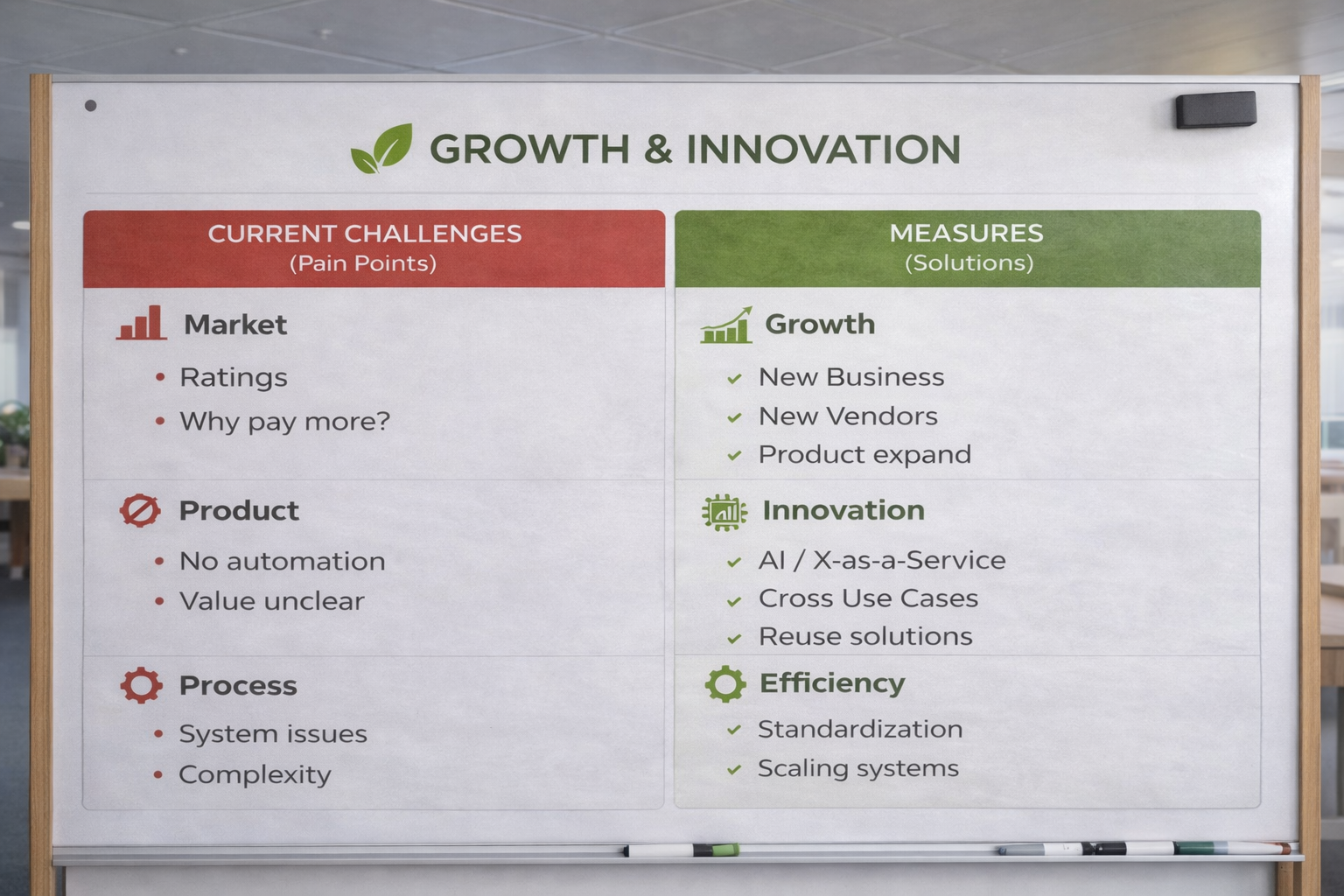
Some of the most inspiring ideas that emerged included:
Building a culture of sustainable innovation
AI / “X-as-a-service” concepts
Data as an innovation and sustainability enabler
New vendors and sourcing approaches (diversify)
standardize and clean data
New (sustainable) business models
Cross-value-chain innovation
Simplifying sustainability
Key takeaway
The biggest insight from our first Business Breakfast was this: companies across industries are facing very similar challenges, but they are also sitting on powerful opportunities.
Whether the topic is supply-chain resilience, data quality, regulatory pressure, or innovation, the companies that move fastest will be the ones that connect sustainability with business value. Not as a side project, but as part of core strategy.