Sustainability Leadership Conference Frankfurt: What Sustainability Management Looks Like in Uncertain Times
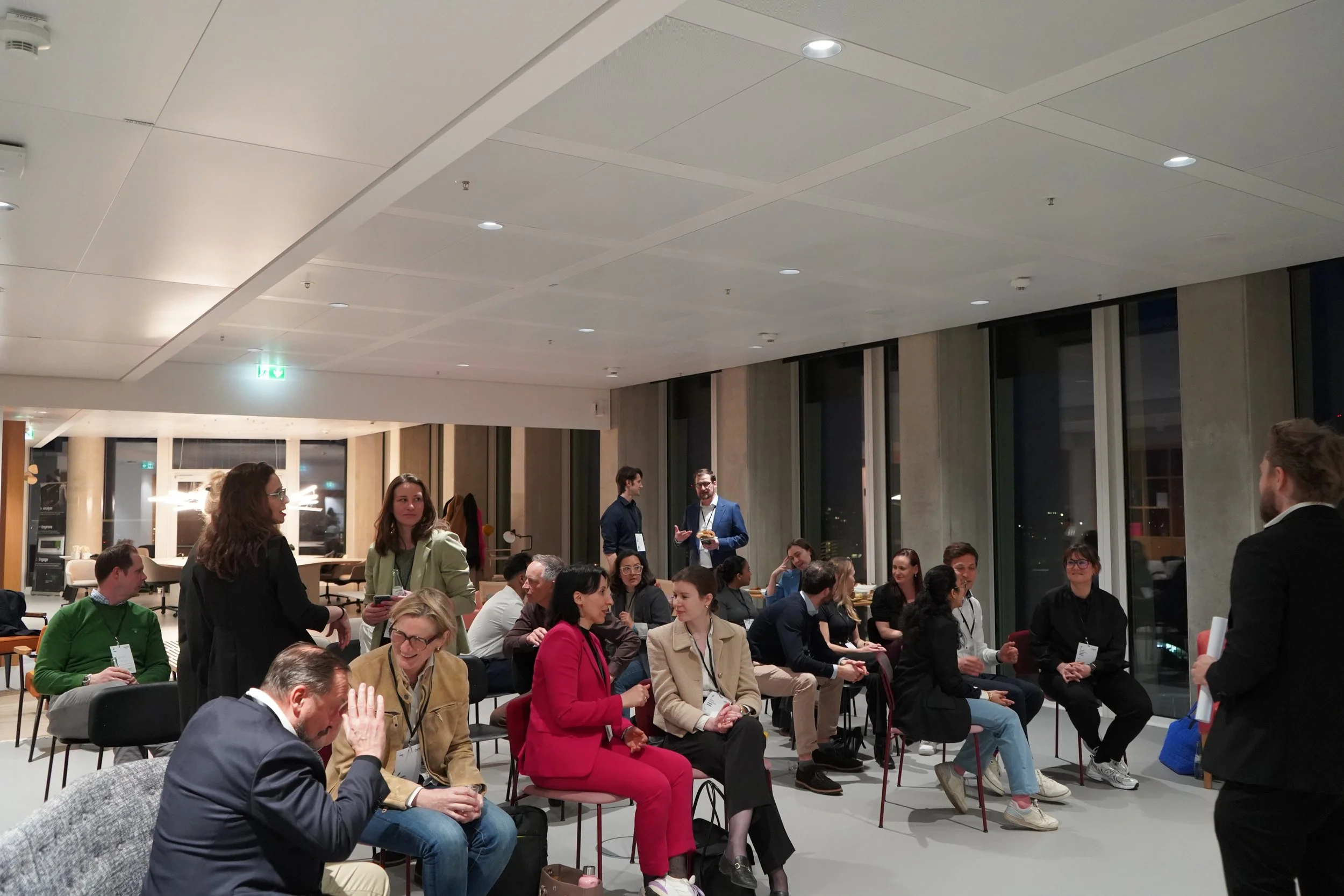
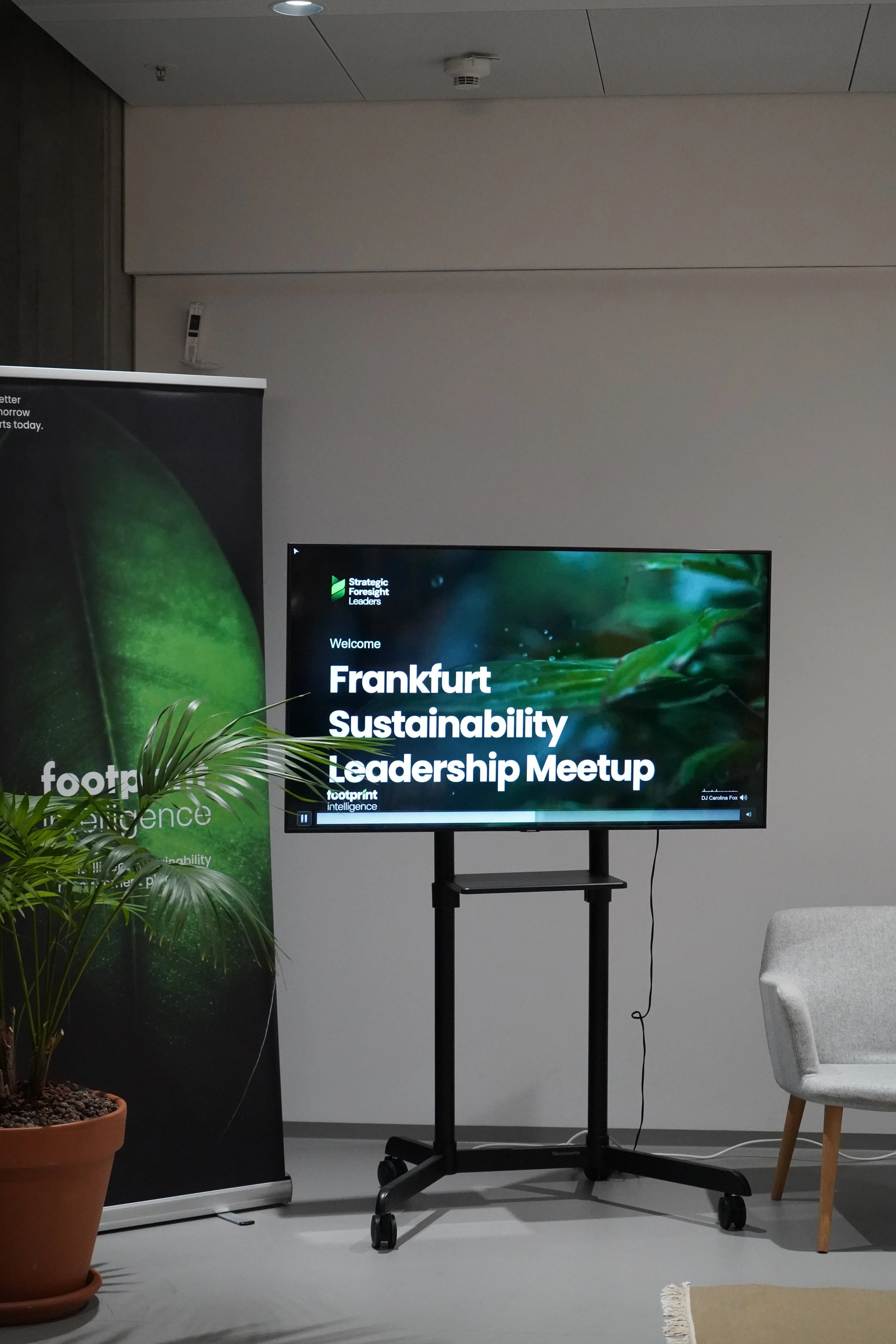
Last Tuesday, on 24 March 2026, Footprint Intelligence brought together sustainability leaders in Frankfurt for an event focused on a timely question: what does effective corporate sustainability management look like now, in a business environment shaped by regulatory change, geopolitical disruption, supply-chain volatility, and rising pressure to prove value? The official event framing already pointed in that direction, with a focus on regulatory trends, AI-driven innovation, organizational engagement and the future of corporate sustainability leadership.
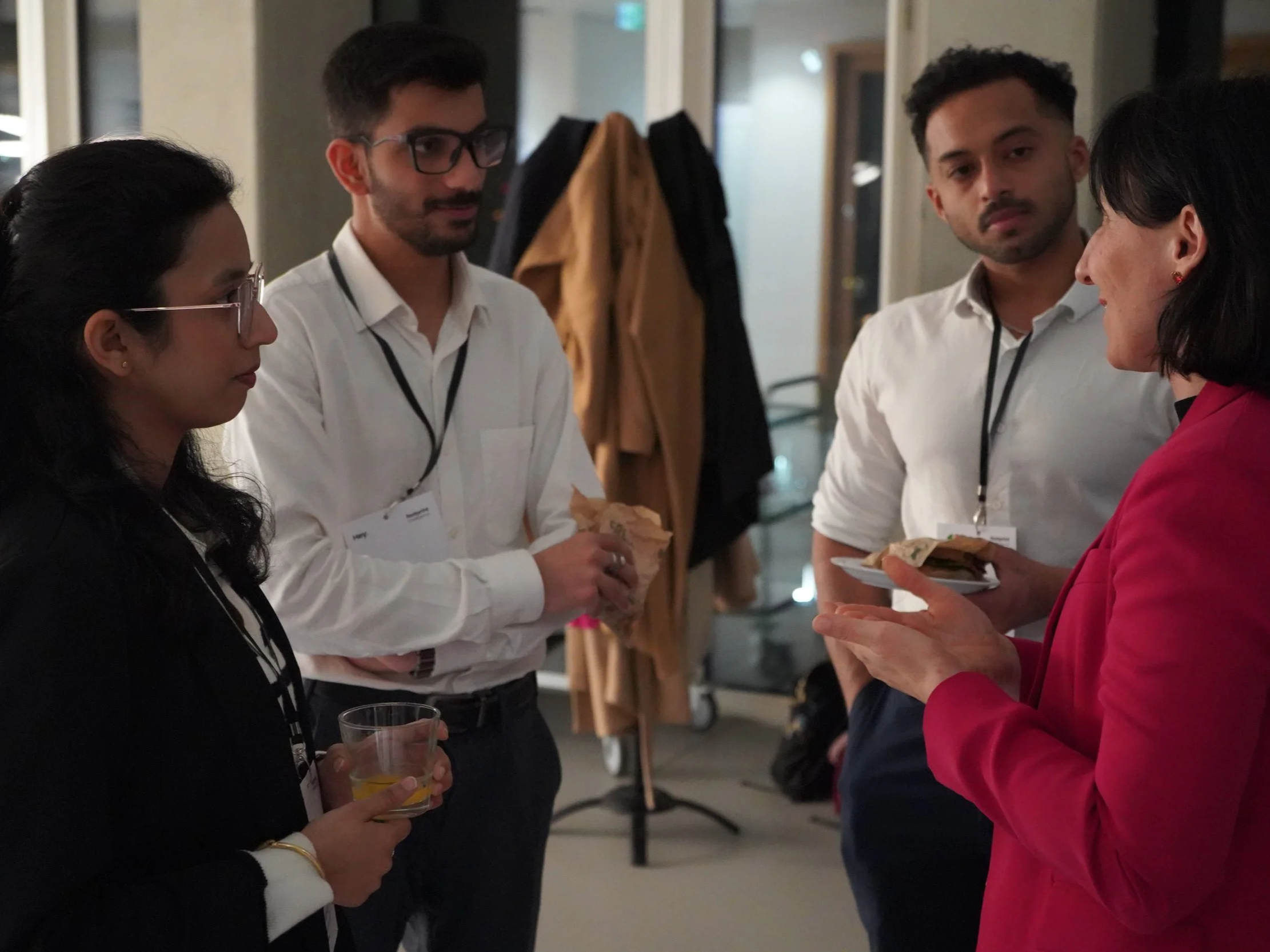
The room reflected that complexity. The discussion brought together perspectives from logistics, industrial manufacturing, mobility and transport, chemicals, healthcare and life sciences, banking, asset management, ESG ratings, technology and digital infrastructure, real estate, hospitality and events. That mix mattered because it made one thing clear very quickly: while sectors experience sustainability pressure differently, the structural questions are increasingly shared.
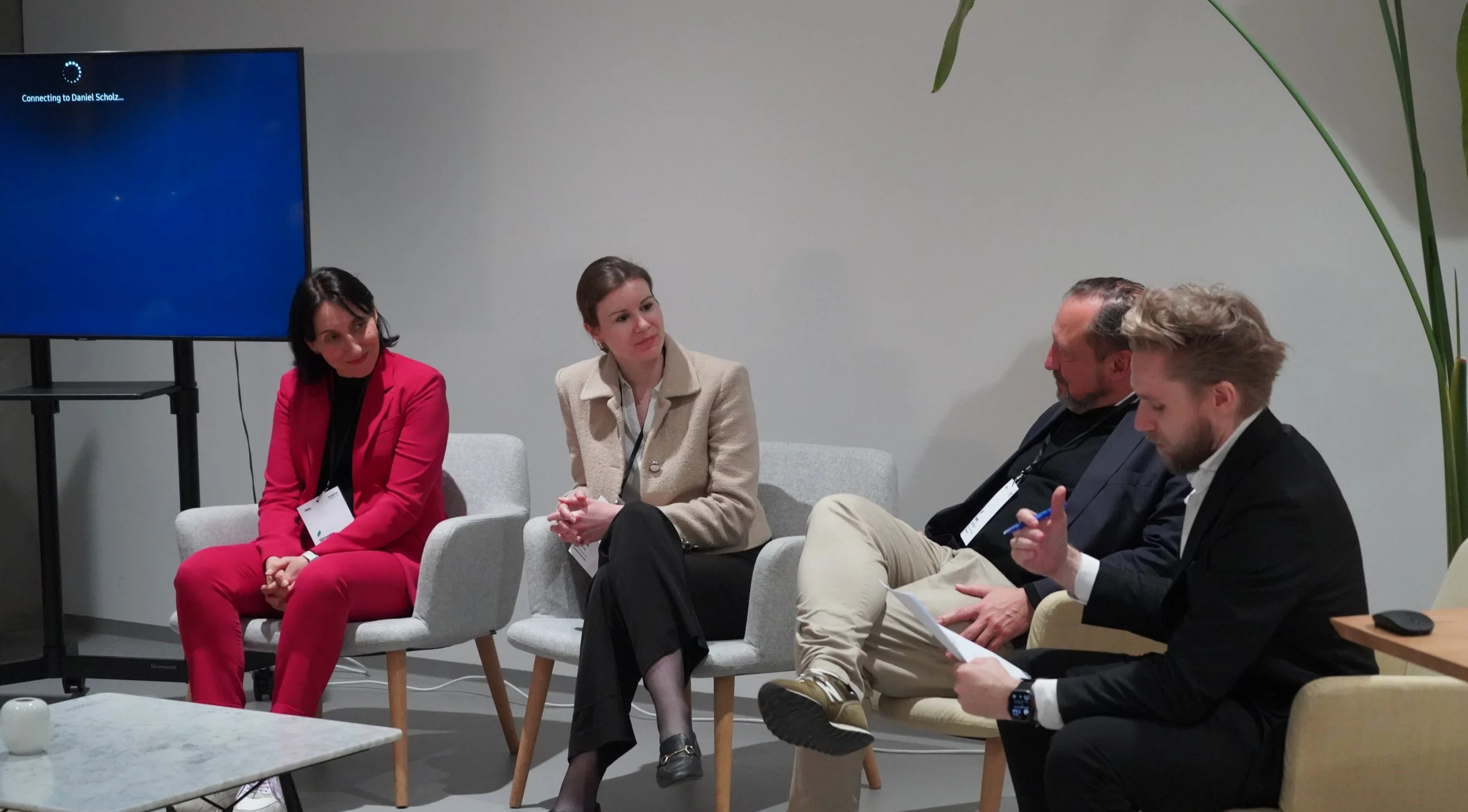
At the center of the evening was the panel on The Future of Corporate Sustainability Management, featuring Simone Ruiz-Vergote (MSCI), Martina Schana (Deutsche Post and DHL) and Georg Schattney (Schindler).
Their perspectives came from three very different but increasingly connected angles: ESG ratings and capital markets; operational decarbonization and Scope 3 management; and industrial implementation, governance, and business steering. Taken together, the panel suggested that sustainability is not disappearing. It is becoming more rigorous, more integrated, and more exposed to the same pressures shaping enterprise risk and competitiveness more broadly.
A More Volatile Environment
A central theme running through the evening was that companies are being asked to lead sustainability in far less predictable conditions than even two years ago. European firms are dealing with supply-chain fragility, tariff uncertainty, geopolitical conflict, inflationary cost pressure, and a far more politicized ESG environment, particularly in the United States. At the same time, the EU is not withdrawing from sustainability regulation, but simplifying and reprioritizing parts of it: the first CSRD wave already applied for the 2024 financial year, while the Omnibus process is narrowing parts of the scope and reducing burden for some companies.
That backdrop helps explain why the tone of the discussion felt different from many sustainability conversations in previous years. The question is no longer whether sustainability matters in principle. The question is whether companies can make it decision-useful under pressure: useful for finance, useful for procurement, useful for operations, useful for supplier engagement, useful for risk management, and increasingly useful for commercial positioning.
From ESG Narrative to Evidence, Risk, and Execution
One of the clearest takeaways from the panel was that the field is shifting from narrative to evidence. That does not mean sustainability has lost strategic relevance. It means the standard of proof has changed.
From the capital-markets and ratings perspective, sustainability data is increasingly judged less by volume and more by quality, comparability, and financial relevance. Forward-looking data, transition credibility, risk exposure, and disclosure structure matter because they influence how external stakeholders interpret the company’s resilience and management quality. This is playing out in a market where scrutiny is high and communication has become more cautious. Reuters has described how companies have become more hesitant to speak publicly about sustainability progress until they can demonstrate clearer evidence, a pattern often associated with greenhushing and broader ESG backlash dynamics.
That broader shift also came through in the panel’s practical framing. Sustainability is becoming less about broad positioning and more about whether the organization can connect data, governance, and action. In that sense, the field is not shrinking. It is professionalizing.
Scope 3 is not primarily an accounting problem. It is a value-chain steering problem
A major insight from the panel was that Scope 3 should no longer be treated primarily as a disclosure exercise. For mature companies, Scope 3 becomes strategically relevant not when the inventory is published, but when management starts trying to influence emissions outside its legal boundary.
That is a crucial distinction. The GHG Protocol makes clear that secondary data, spend-based methods, proxies, and industry-average factors are useful for screening, estimating, and building an initial Scope 3 baseline. But they become limited once a company wants to differentiate between suppliers, track real supplier-level improvements, or credibly demonstrate decarbonization over time. For the most relevant categories and reduction programmes, companies are expected to move progressively toward higher-quality primary data from suppliers and other value-chain partners. The same logic is reflected in SBTi guidance: companies must set Scope 3 targets when Scope 3 emissions account for 40% or more of total emissions, and those targets must collectively cover at least 67% of Scope 3 emissions. In practice, that often makes supplier engagement a critical part of transition management.
This is exactly why Scope 3 is better understood as a steering challenge. A company may be able to report a number through questionnaires and modelled data, but that is not the same as managing value-chain emissions. Real Scope 3 management begins when visibility has to be translated into procurement logic, supplier segmentation, contracts, commercial incentives, transition plans, and operational follow-through.
In logistics, the challenge becomes especially visible. The panel pointed to a reality many large companies face: most emissions sit outside direct control, often across external transport partners and smaller operators with very different levels of technical maturity, data readiness, and administrative capacity. The issue is not simply how to collect more data, but how to make decarbonization measurable, comparable, and practically executable across an ecosystem that does not run on one common system.
Where sustainability sits within the organization signals its level of maturity
Another powerful point reinforced in Frankfurt was that the organizational placement of sustainability says a great deal about the maturity of the company.
In less mature setups, sustainability is often concentrated in one central team, or even one individual, who is then expected to influence finance, procurement, operations, product, sales, and supply chain from the outside. That can create awareness. But it rarely creates sufficient leverage. In more mature organizations, sustainability is embedded into the functions that already control spend, specifications, sourcing decisions, capital allocation, risk processes, and operational performance.
Procurement is one of the clearest examples. This is not only because supplier and value-chain emissions often dominate the footprint, but because procurement directly shapes supplier selection, tender criteria, contract terms, scorecards, and performance expectations.
That is why sustainability embedded in procurement is such a strong maturity signal. It shows that the company is moving beyond reporting awareness into real steering logic. A central sustainability manager remains important, but increasingly as translator, architect, and integrator. The larger the value-chain footprint, the less credible it is to treat sustainability as a standalone staff function with only indirect influence on departments that make the real sourcing and operating decisions.
The business case has to be made visible, not just calculated
One of the key points raised in the panel was the importance of communication and of making value tangible.
In many organizations, sustainability teams are analytically correct but commercially abstract. They can explain emission reductions in percentage terms, define categories precisely, and build a robust reporting case. But that does not automatically create buy-in across stakeholders, suppliers, internal departments, or customers.
A central insight from the discussion was that sustainability management also needs a language of visibility. Saying that operational decarbonization has reduced emissions by a given percentage may be correct. But for a consumer, that often remains intangible. Seeing an electric delivery vehicle arrive at the doorstep makes the sustainability effort real in a way a percentage never fully can. The same logic applies internally. Finance needs sustainability translated into cost, resilience, balance-sheet logic, and planning quality. Procurement needs it translated into supplier criteria and commercial leverage. Operations needs it translated into execution, feasibility, and efficiency. Sales needs it translated into customer value and market relevance.
This is a more strategic point than it may first appear. In uncertain times, business cases do not become stronger by being more abstract. They become stronger by being more legible to the functions that need to act on them.
The sustainability manager is becoming a business integrator
The panel also made clear that the role of the sustainability manager is changing.
The old image of sustainability as a specialist function working next to the business is becoming less realistic. The more mature version of the role is far more integrative: connecting finance, operations, procurement, risk, and business leadership; translating between regulatory obligations and steering logic; and ensuring that sustainability data becomes actionable rather than merely reportable.
One organizational point discussed during the panel was especially revealing: when reporting is anchored in Finance, this is not just an administrative decision. It signals that sustainability is increasingly being understood through the lens of control, steering, and financial relevance. The industrial perspective on the panel reinforced this from another angle. In practice, sustainability becomes far more powerful once it is linked to transformation strategy, product and operational decisions, and eventually to market pull. As the discussion suggested, one of the strongest signals of progress is when commercial teams start coming back and saying: customers want this.
That is the turning point from push to pull. And it is one of the clearest signs that sustainability has moved from peripheral initiative to business reality.
Data infrastructure is now strategic infrastructure
A further strong theme of the evening was that data infrastructure has become a strategic capability in its own right.
Across the panel and the follow-on discussions, the recurring pattern was familiar: fragmented systems, inconsistent supplier data, high manual effort, difficult certificate validation, and too much reliance on disconnected workflows. In that environment, reporting remains labor-intensive, and steering remains weak.
From the panel’s capital markets perspective, this matters not only internally but also externally. Data quality shapes how a company is assessed in ratings, financing, and risk evaluation. Poor structure and limited traceability weaken credibility. Better digital formats, machine-readable disclosures, and more reusable data models improve comparability and reduce friction across reporting and analysis processes. The strategic implication is straightforward: data architecture increasingly determines whether sustainability can be managed as a real business system rather than as a recurring reporting project.
That is also why AI came up at the event in a grounded way rather than as hype. In the discussion, AI was linked to validation, evidence handling, supplier data workflows, certificate checks, and the better use of structured information. The relevant question was not whether AI sounds innovative, but whether it reduces friction, improves traceability, and makes sustainability management more scalable.
What the evening suggested about the future of the field
The strongest conclusion from Frankfurt is that sustainability management is entering a more demanding but also more consequential phase.
The external environment is more difficult. Regulation is evolving. Supply chains are more exposed. The political climate around ESG is more polarized. Geopolitical disruptions are affecting trade, freight, and planning assumptions. But none of that makes sustainability less strategic. It changes the terms on which it has to be led.
The future belongs less to sustainability as a standalone narrative and more to sustainability as a management discipline: integrated into procurement, finance, operations, and risk; built on better data and better systems; translated into visible business value; and capable of influencing decisions across the value chain rather than only reporting on them after the fact.
That, more than anything, was the message that emerged from the panel and the broader conversation in Frankfurt. Sustainability leadership today is not about defending the topic in the abstract. It is about making it operationally credible, financially legible, organizationally embedded, and resilient under pressure.