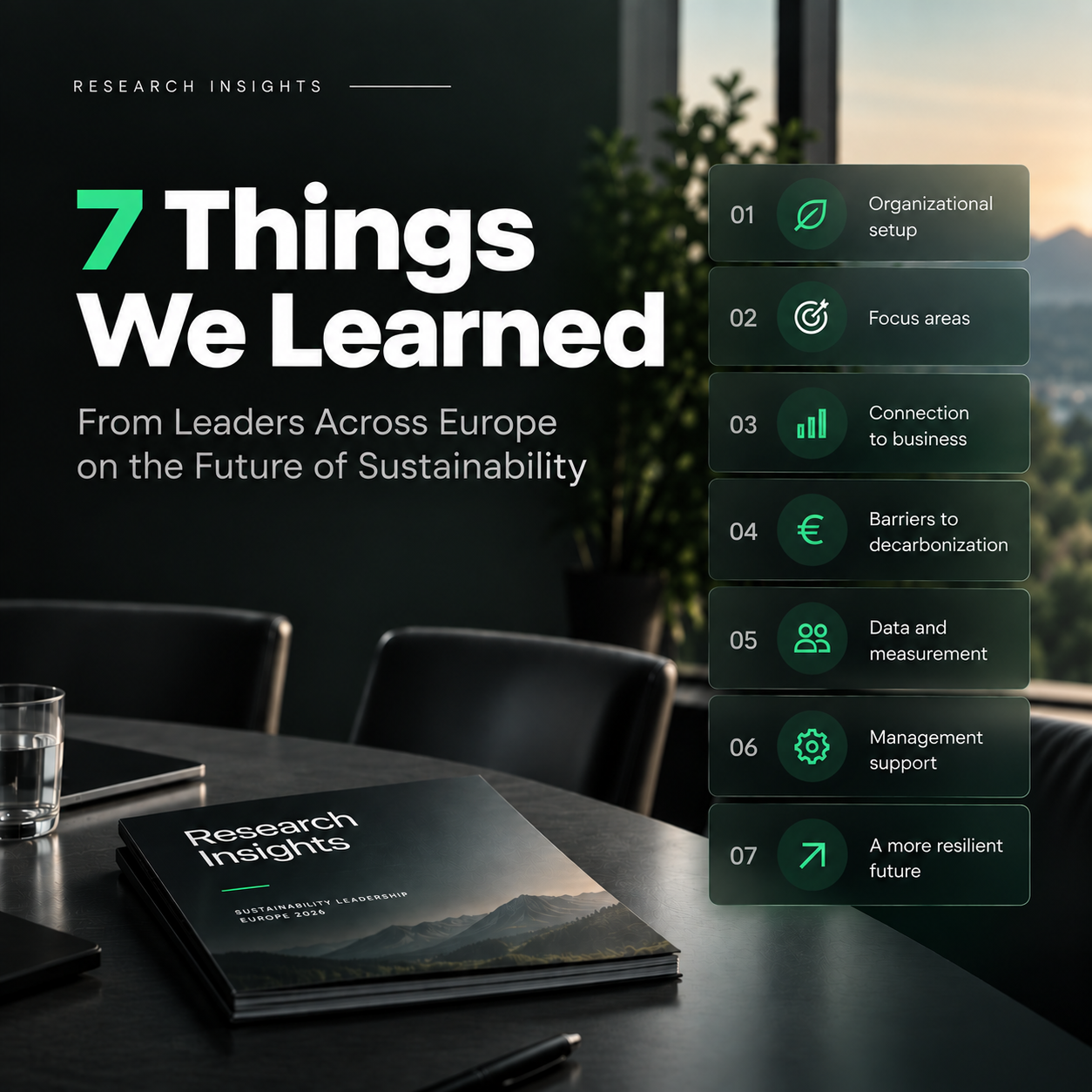
Perspectives across industries and a shared leadership challenge: translating sustainability into better decisions, stronger resilience, and lasting business value.
Introduction: Different Industries, Shared Challenges
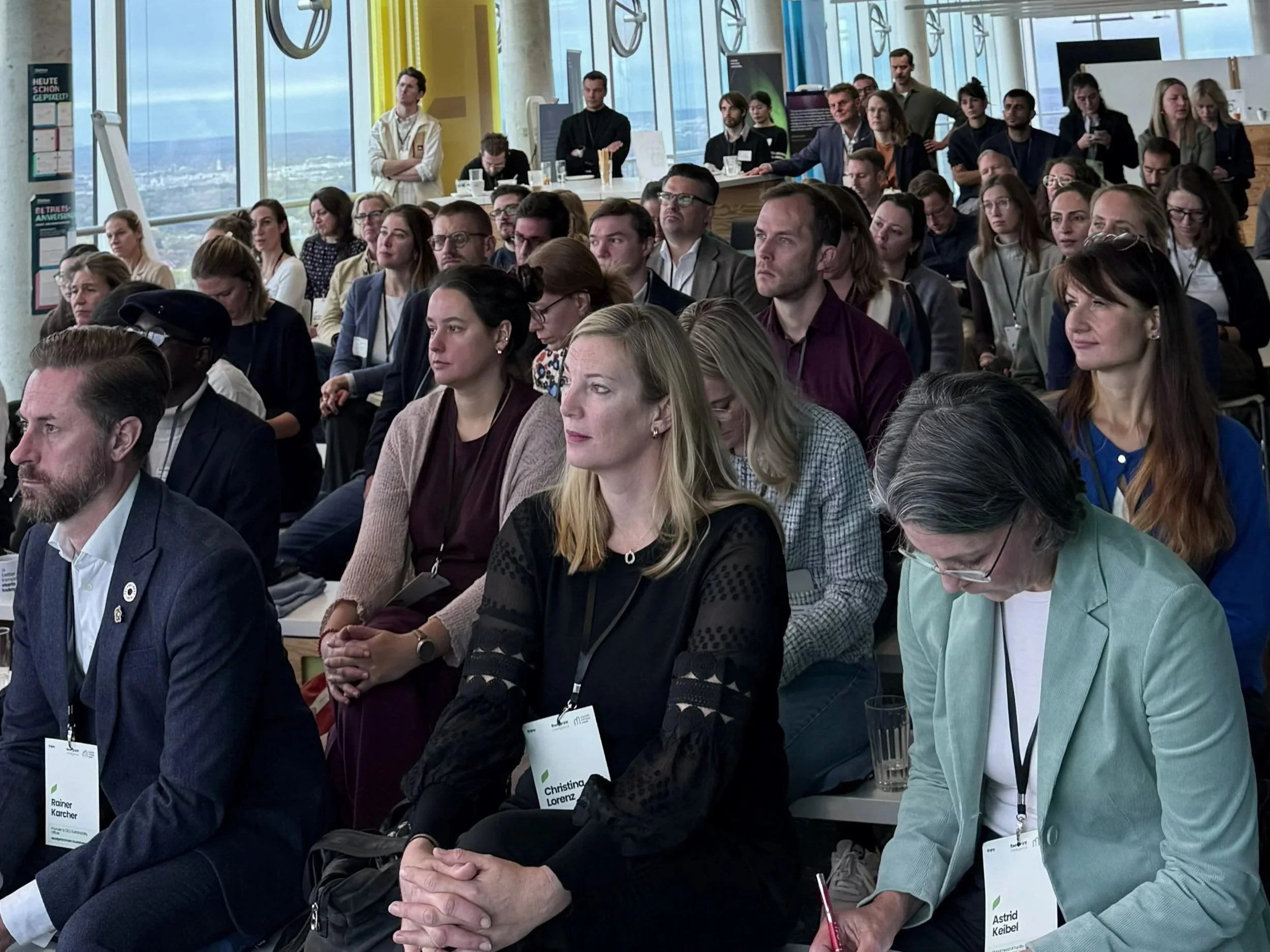
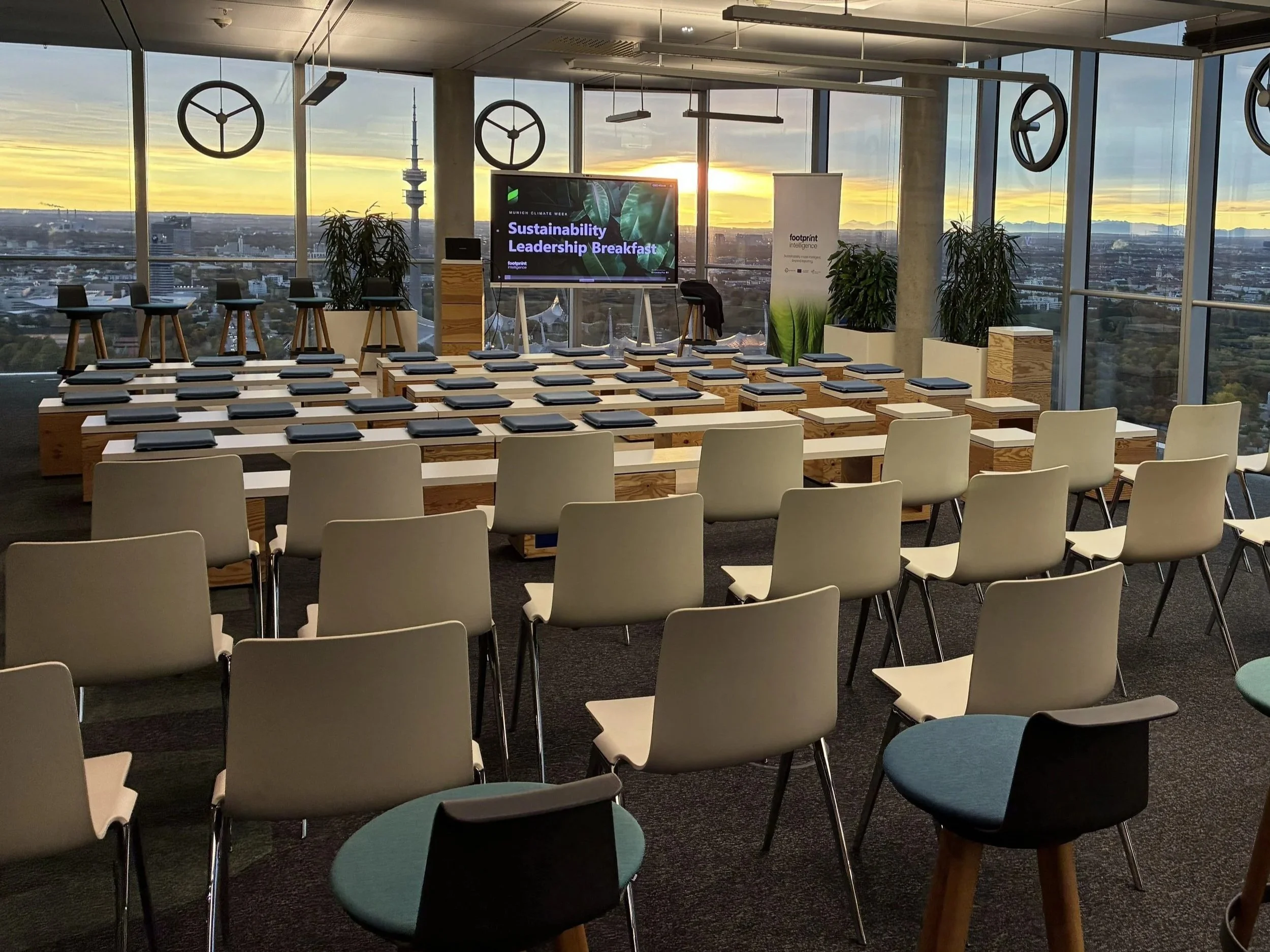
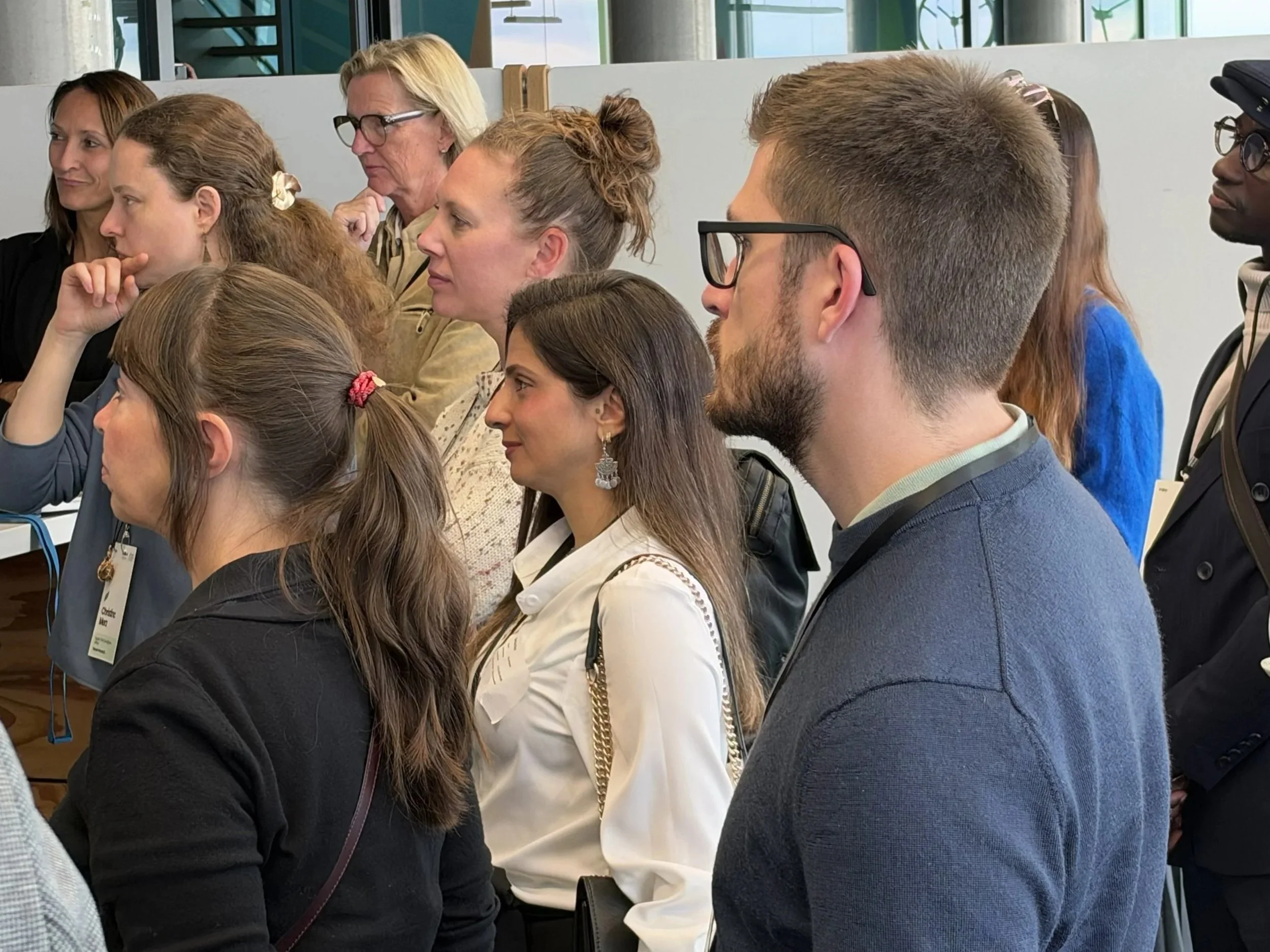
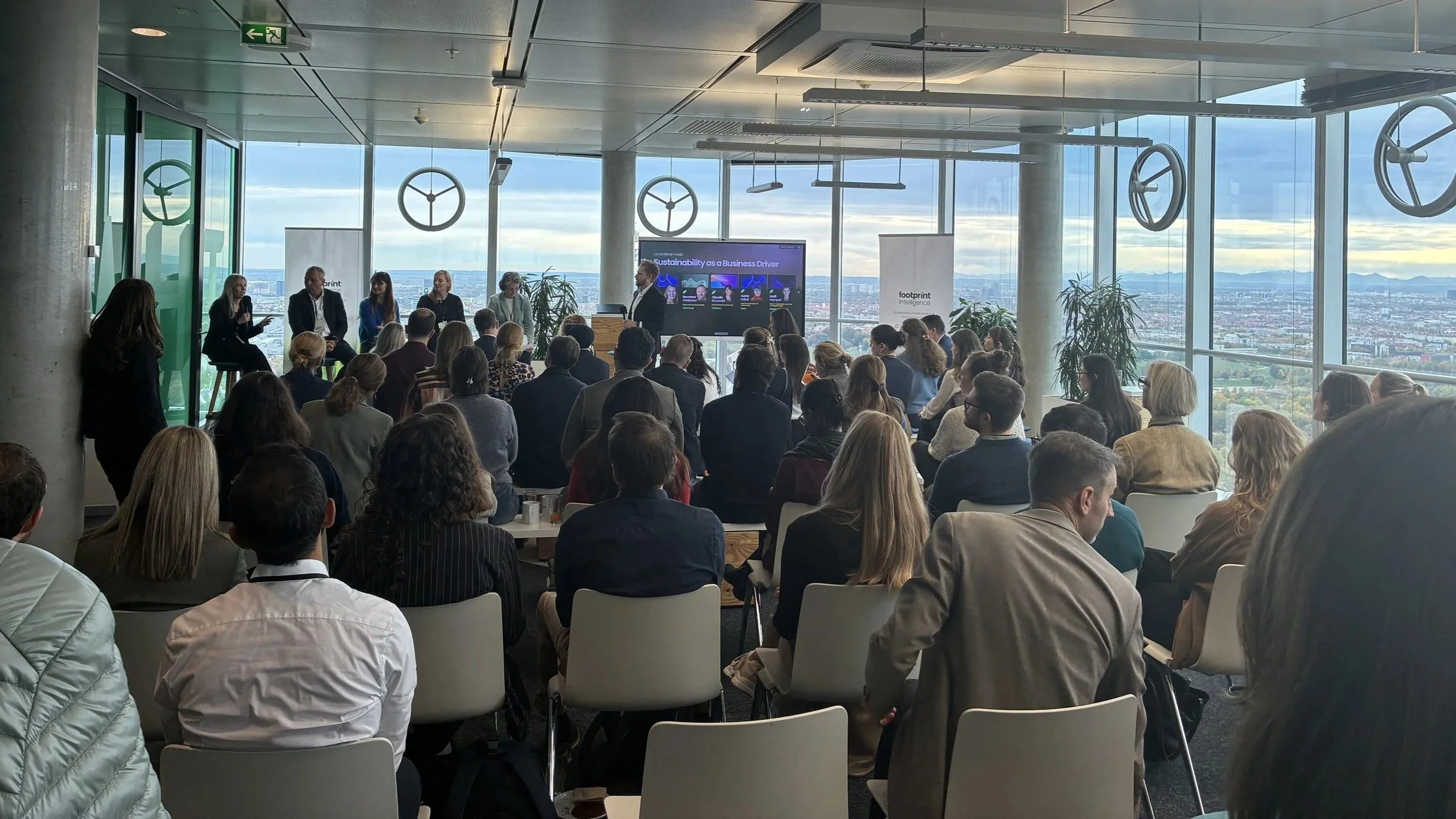
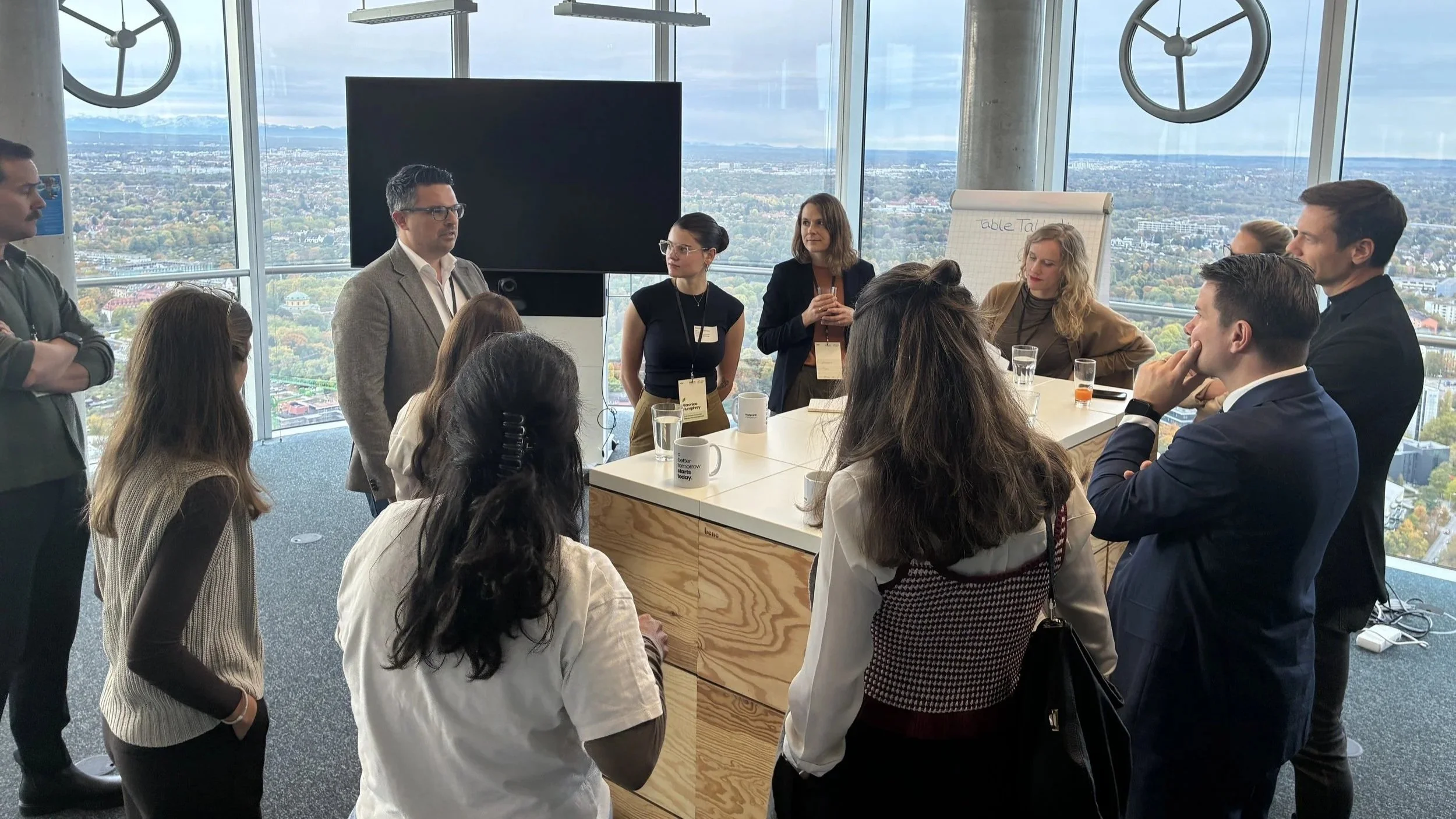
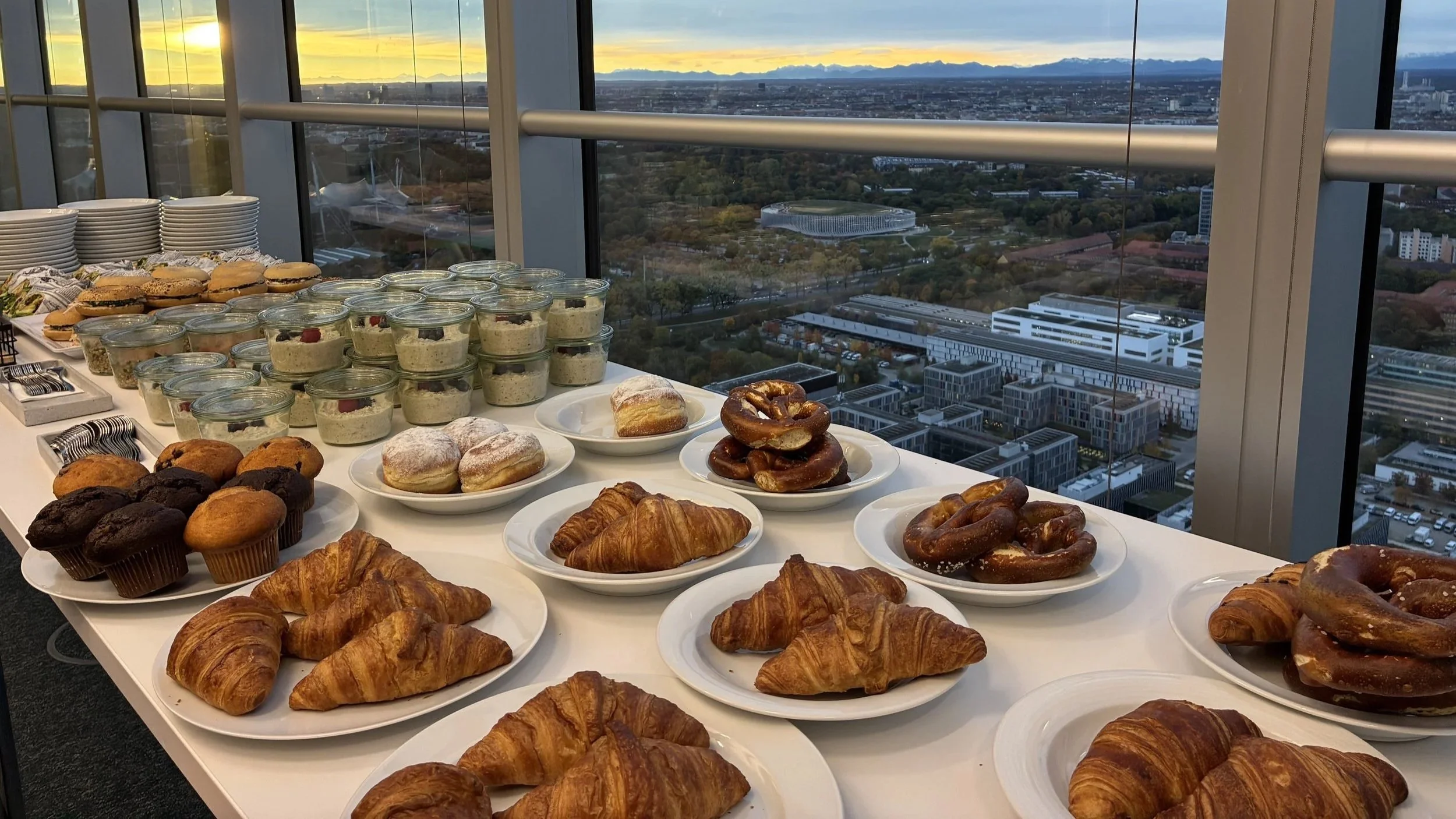
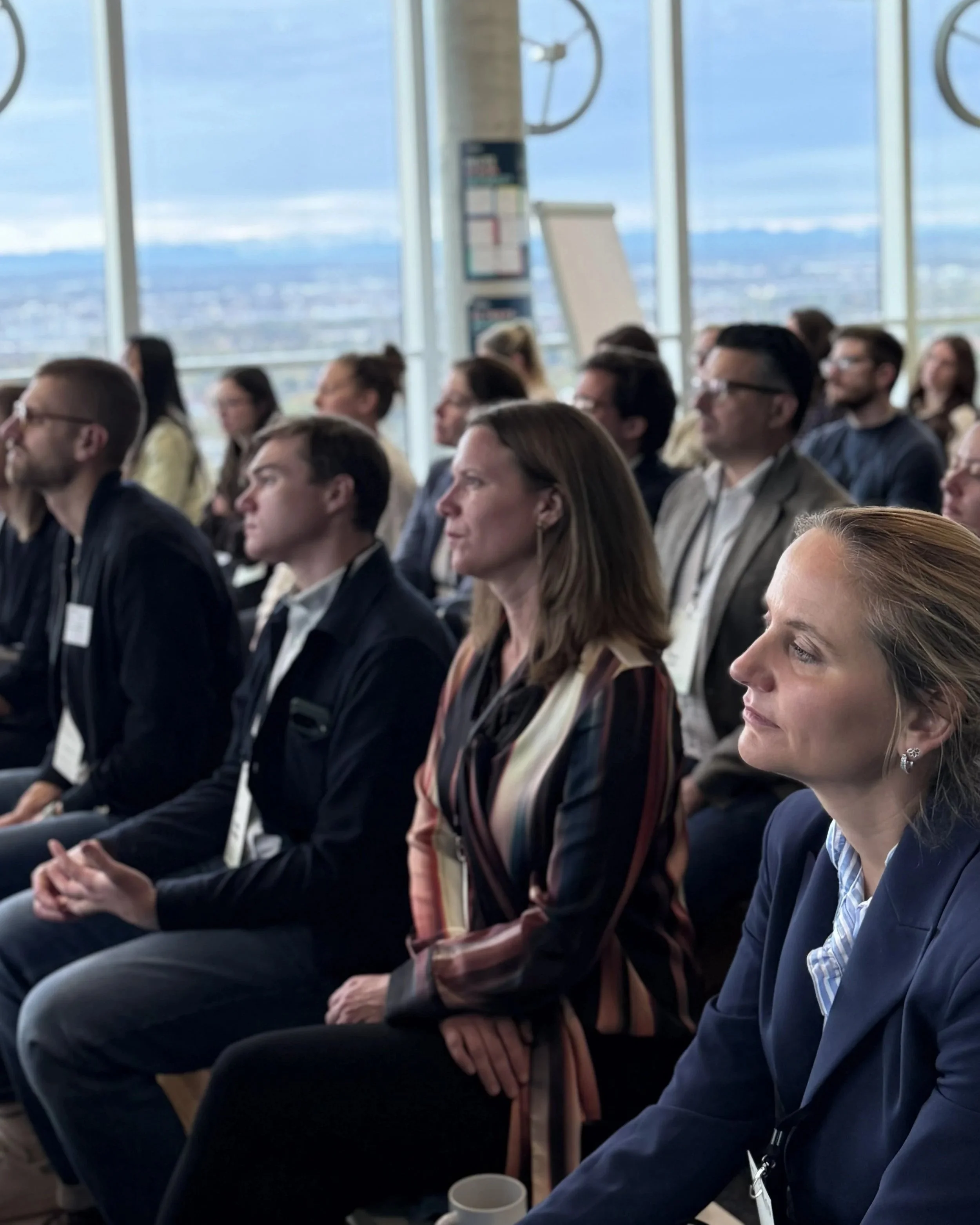
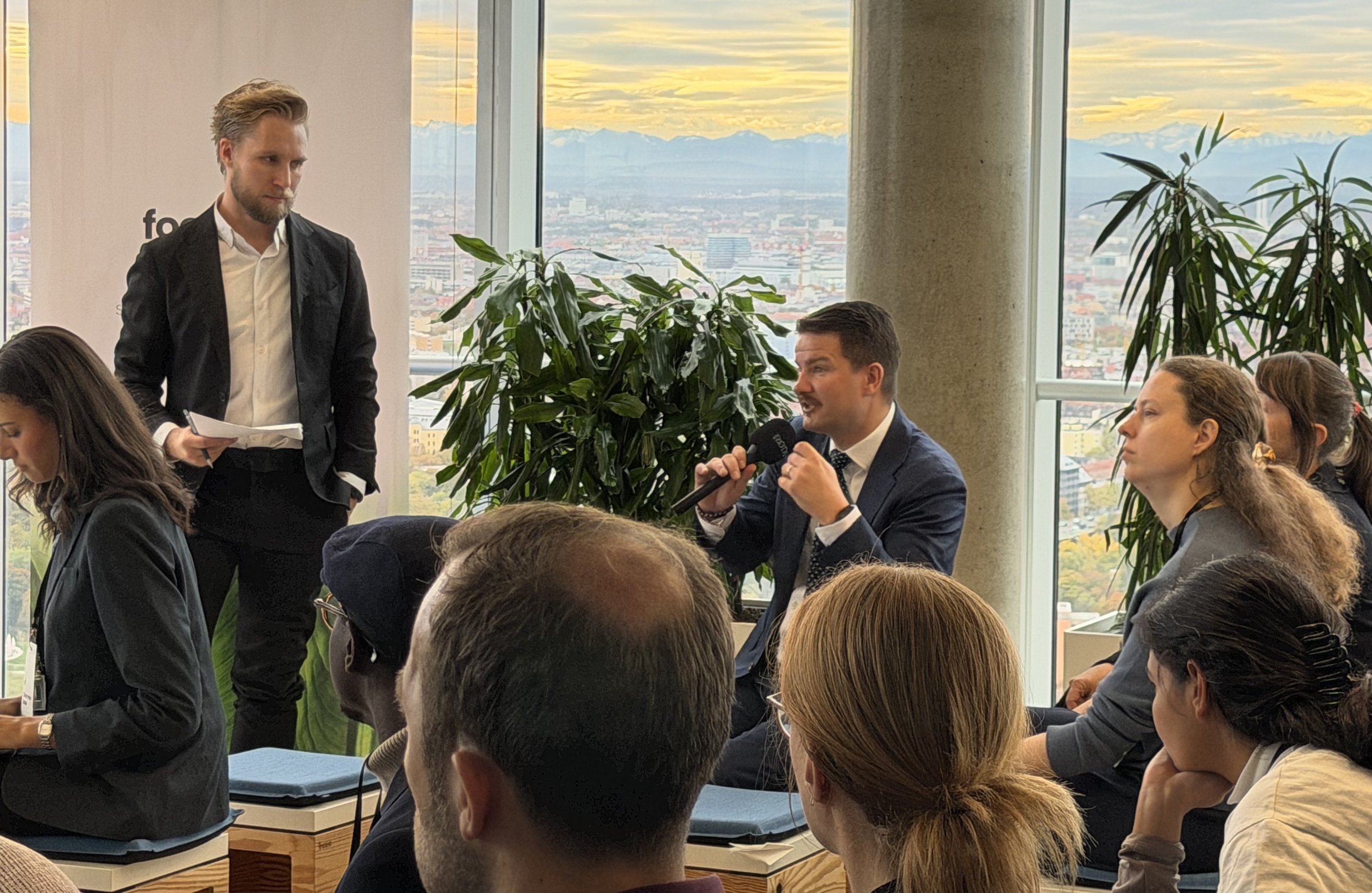
The Sustainability Leadership Breakfast on October 23, 2026, brought together over 75 leaders and professionals at Munich’s O2 Tower during Munich Climate Week.
Participants represented organizations including Allianz, Amazon, Siemens Energy, Infineon Technologies, Telefónica, Nokia, WALTER GROUP, Deutsche Telekom, IONITY, and Essity. Across sustainability, strategy, finance, procurement, and operations, the event created an opportunity to compare experiences beyond individual sectors and organizational boundaries.
The central question was practical: What needs to happen for sustainability to become a business priority?
That question connected the entire program, from the opening insights and ROI framework to the keynote, cross-industry panel, and interactive table talk discussions. It also provided a useful lens for reflecting on the morning: sustainability creates value when organizations connect information with decisions, assign responsibility, and develop the capabilities to act.
A Citywide Platform for Collaboration
Our breakfast formed part of a much broader exchange across Munich. In its opening announcement, Munich Climate Week reported more than 400 events, over 12,000 registrations, and over 100 volunteers supporting the initiative. The registration figure was reported at the beginning of the week, demonstrating the level of interest already generated across business, research, politics, and civil society.
For companies, this kind of exchange has a practical purpose. Many sustainability challenges extend across organizational boundaries. A manufacturer’s emissions depend partly on suppliers and energy systems. A logistics company’s decarbonization options depend on infrastructure, technology, and customer demand. Digital transformation brings questions about electricity, resources, and procurement into technology decisions.
Bringing these perspectives together helps reveal where organizations face similar obstacles, where their circumstances differ, and where collaboration could accelerate progress.
Our Leadership Breakfast applied that idea at a smaller scale: participants with different responsibilities, connected by questions about implementation, competitiveness, and long-term value.
Starting with Leadership, Strategic Foresight, and Value
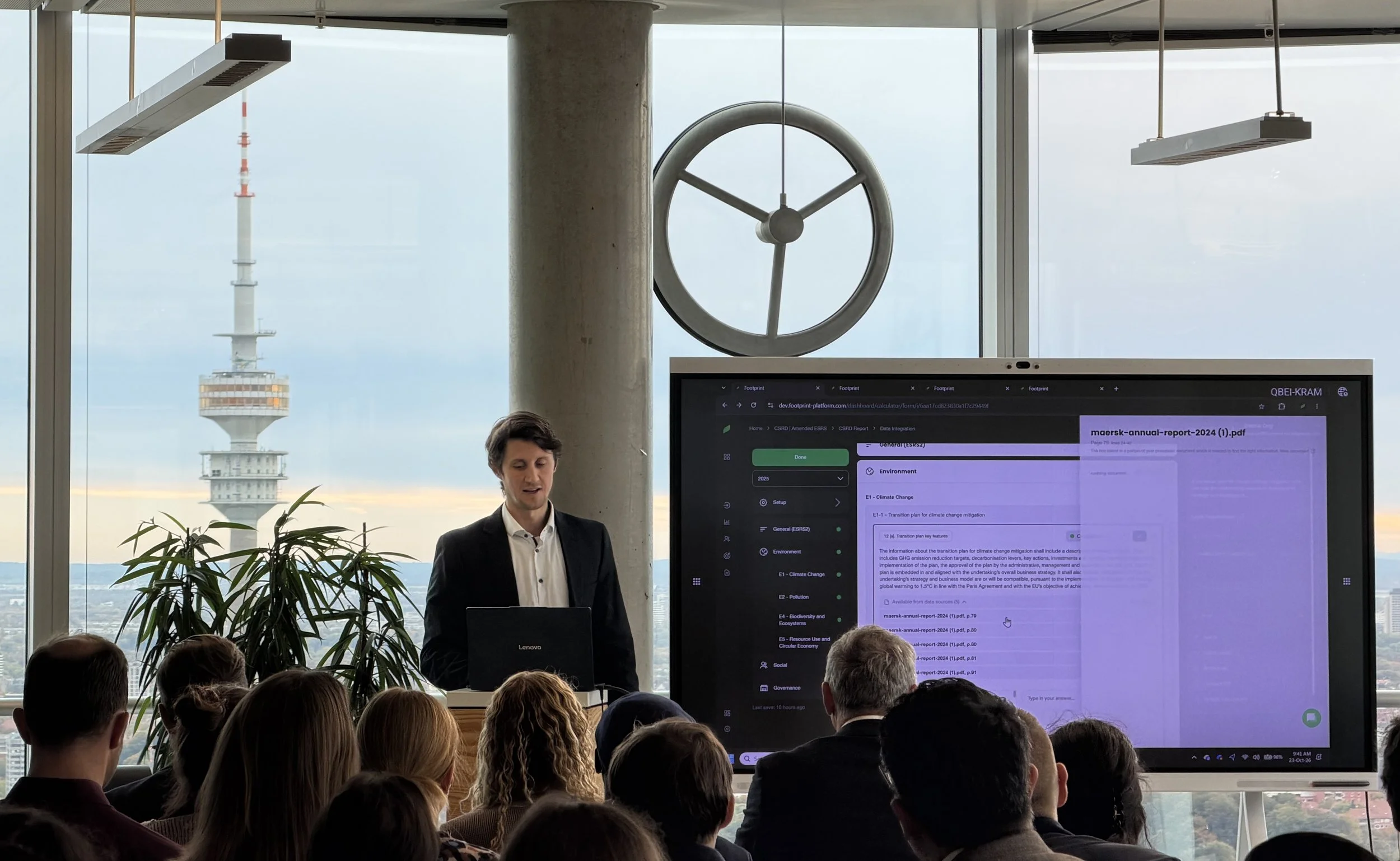
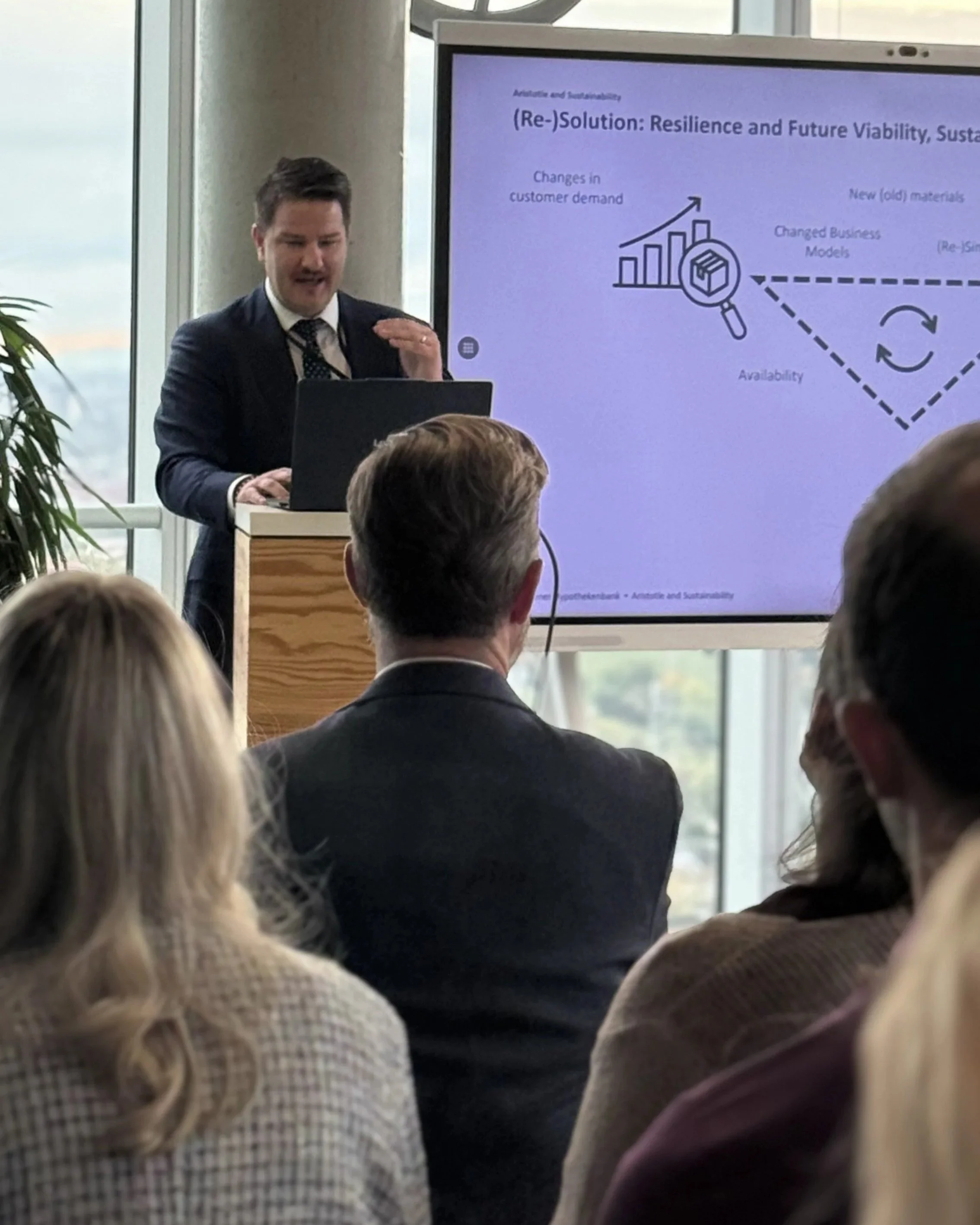
The morning opened with insights, trends, and an ROI framework before moving into Sebastian Dittrich’s (Münchener Hypothekenbank) keynote, “Aristotle and Sustainability.” The program then connected this strategic perspective with corporate experience through the leadership panel and interactive discussions.
The sequence matters. Sustainability decisions often require companies to consider different time horizons simultaneously. Operational teams need solutions that work today. Finance teams need credible assumptions and investment discipline. Leadership needs to understand how resource availability, customer expectations, and changing market conditions could affect the business over time.
A useful business case brings those perspectives together. It makes costs and benefits visible, explains uncertainties, and clarifies what a decision means for the organization.
Recent research reinforces the relevance of this approach. Deloitte’s 2026 C-suite Sustainability Report, based on responses from more than 2,100 executives across 29 countries, found that 77% said sustainability investments deliver greater ROI than other business investments. These are executives’ reported assessments, rather than independently verified returns for every project, but they demonstrate the commercial value many leaders associate with sustainability investment.
Therefore, the leadership task is to translate that potential into a credible case for the specific company, project, and market.
Embedding Sustainability in Corporate Steering
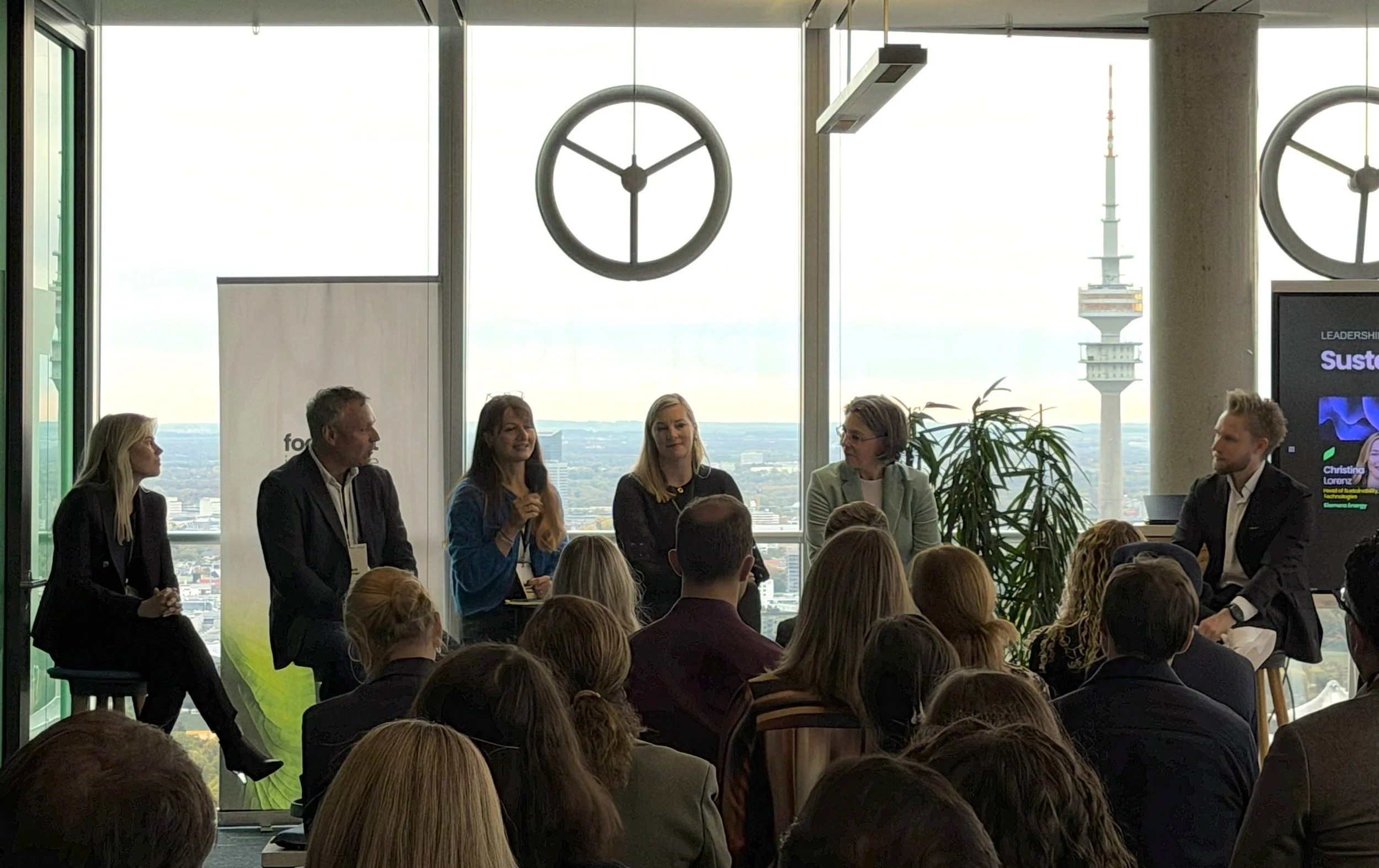
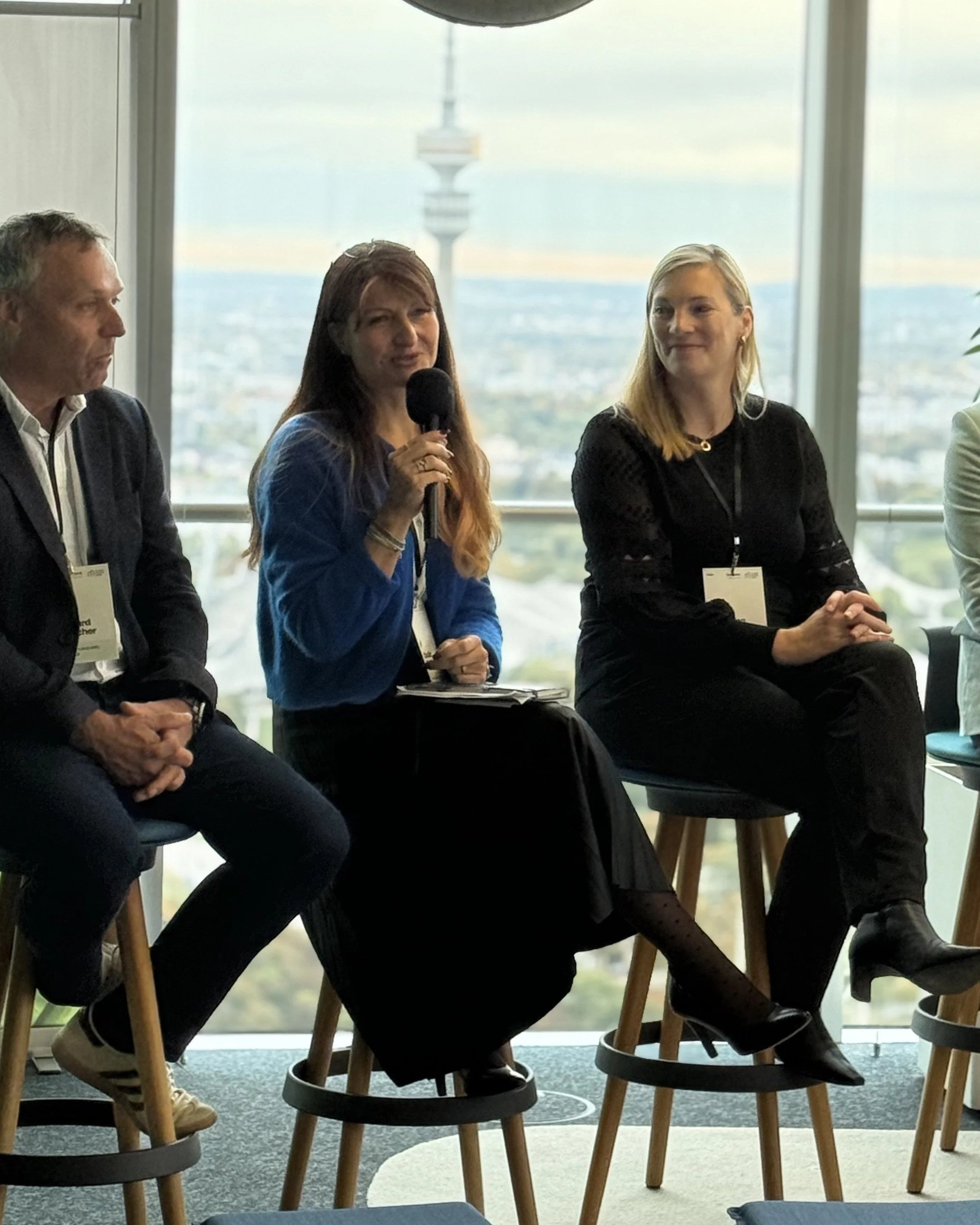
The cross-industry panel brought together five complementary perspectives:
Steffi Gamperl (Infineon Technologies): governance, strategic insights, and corporate steering.
Claudia Grunwald (Telefónica Germany): ESG reporting, data governance, and reliable management information.
Christina Lorenz (Siemens Energy): sustainability within Grid Technologies, customer projects, and business operations.
Astrid Keibel (Nokia): facilities, energy, and implementation across locations.
Bernhard Haidacher (WALTER GROUP): practical decarbonization within a commercially demanding logistics environment.
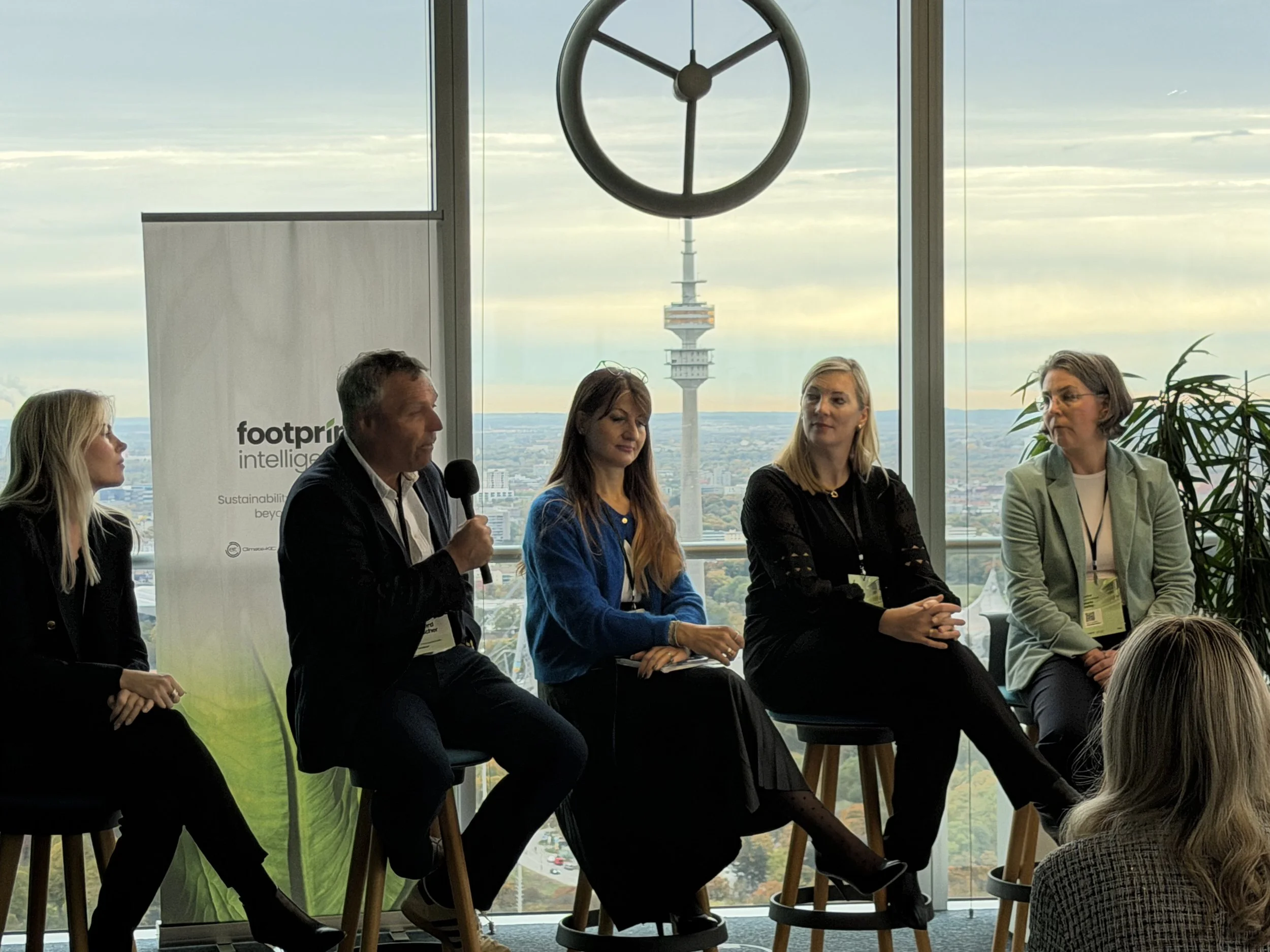
Together, these perspectives connected the organizational foundations of sustainability with the decisions through which it becomes tangible.
In her speaker reflection, Steffi Gamperl, Director Sustainability Reporting & Strategic Insights at Infineon Technologies, expressed the strategic opportunity:
“Sustainability is becoming a key driver of innovation, resilience and long-term business success. Leading companies will be those that use sustainability as a strategic lens to strengthen customer value and support business transformation. Achieving a circular economy will require collaboration across industries and value chains to develop scalable solutions.”
Her perspective connects three elements that companies need to address together: strategic direction, customer relevance, and collaboration.
Embedding sustainability in corporate steering means considering it within existing management processes: investment reviews, product development, supplier selection, risk assessments, and performance discussions. It also means clarifying who is responsible for the decisions that influence an outcome.
A target becomes more actionable when the organization understands which functions can affect it, what information they need, and how progress will be reviewed.
Making ESG Data Useful for Business Decisions
Claudia Grunwald, Senior ESG Reporting Manager at Telefónica Germany, brought the discussion to a critical foundation: the quality and usability of sustainability data.
“The future of corporate sustainability is about moving from reporting to action. The real value lies not in the report itself, but in using sustainability insights to shape better decisions, strengthen collaboration and create long-term business value.”
Reporting processes can create valuable visibility across a business. They bring together information about energy, emissions, resources, suppliers, and organizational responsibilities. However, their wider value depends on how that information is used.
For a management team, the next questions are about where to act. Which locations have the greatest improvement potential? Which suppliers or materials create exposure? Which measures deserve investment? Where are assumptions too uncertain to support a decision?
Our reflection is that data quality and decision relevance need to develop together.
A consistently calculated indicator helps teams compare performance. Clear ownership helps resolve gaps. Traceable evidence supports internal review and external assurance. And connecting the information to an operational or financial question gives people a reason to use it.
This also creates a stronger basis for collaboration between sustainability and finance. Both functions need reliable information, transparent assumptions, and a shared understanding of what a number means.
Building Capabilities across the Company
Moving closer to products, projects, and customers introduces another challenge: sustainability needs to work within the commercial and technical realities of the business.
Christina Lorenz, Head of Sustainability, Grid Technologies at Siemens Energy, captured this clearly:
“From regulatory compliance to business integration - in order to embed sustainability, capabilities will need to be built across the company.”
That observation has direct implications for implementation.
Procurement teams need to evaluate supplier information and understand which requirements are relevant. Sales teams need to explain sustainability benefits in terms customers value. Finance needs to assess costs, savings, and uncertainty. And project teams need to translate ambitions into specifications and delivery decisions.
The sustainability function can provide expertise and coordination, but implementation depends on ownership being distributed across the organization.
This is particularly relevant in project-driven businesses, where customer requirements, technical feasibility, material choices, and commercial terms come together. Corporate objectives need to be translated into decisions that people can apply within that environment.
Evaluating Resilience and the Cost of Inaction
The operational perspectives of Nokia and WALTER GROUP brought an important distinction into focus: the economics of sustainability measures vary considerably.
Energy efficiency can offer a relatively direct connection between lower consumption, reduced operating costs, and emissions reductions. Other measures may require substantial upfront investment, new infrastructure, or customer willingness to support a higher initial cost.
Astrid Keibel, Head of Global FM, Security, & Sustainability at Nokia, illustrated how energy measures can reduce operating costs and exposure to energy-price volatility, while requiring different solutions depending on local infrastructure and market conditions.
Bernhard Haidacher, Head of Group Sustainability at WALTER GROUP, highlighted the challenge in road freight: with tight margins, decarbonization depends on how transition costs are shared across transportation providers and customers.
These differences make careful assessment essential. Organizations need to understand where environmental and financial benefits align readily and where additional conditions are necessary.
Sebastian Dittrich, Referent Nachhaltigkeitsmanagement at Münchener Hypothekenbank, highlighted the importance of considering both action and inaction:
“Understanding ESG-risks, costs of implemented and omitted sustainability measures and their long term impacts will be the driving principles of every successful enterprise.”
The reference to omitted measures is particularly relevant.
An investment assessment should consider what happens if a company postpones a decision. That could include continued exposure to volatile energy costs, dependence on constrained resources, missed efficiency improvements, or difficulties responding to customer requirements.
These effects should be evaluated with the same discipline as projected benefits. Assumptions need to be explicit, uncertainty needs to be acknowledged, and different scenarios may lead to different conclusions.
For us, the implication is clear: a credible sustainability business case should connect financial performance, operational resilience, and the time horizon of the decision.
Connecting Sustainability with Customer Value
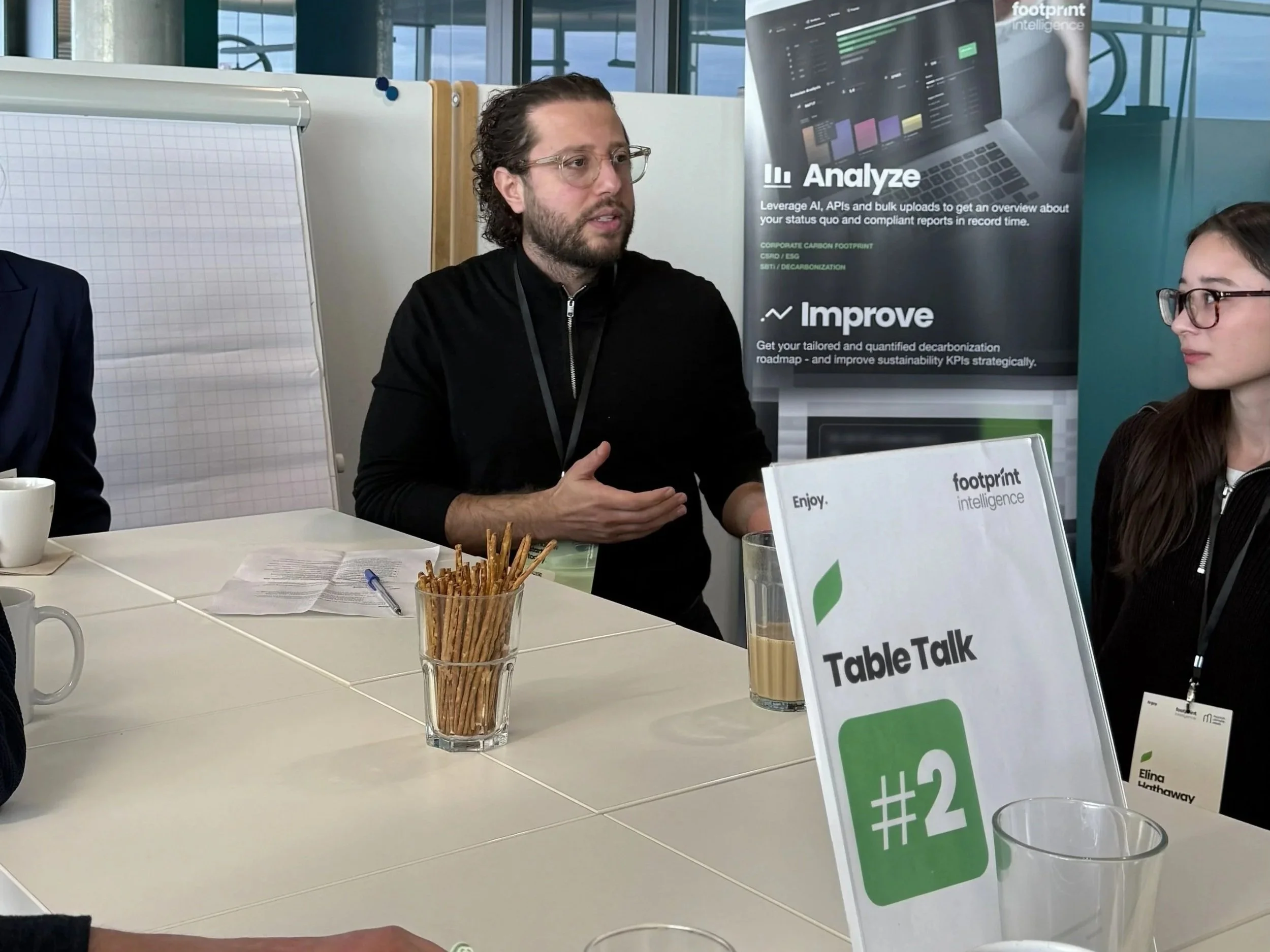
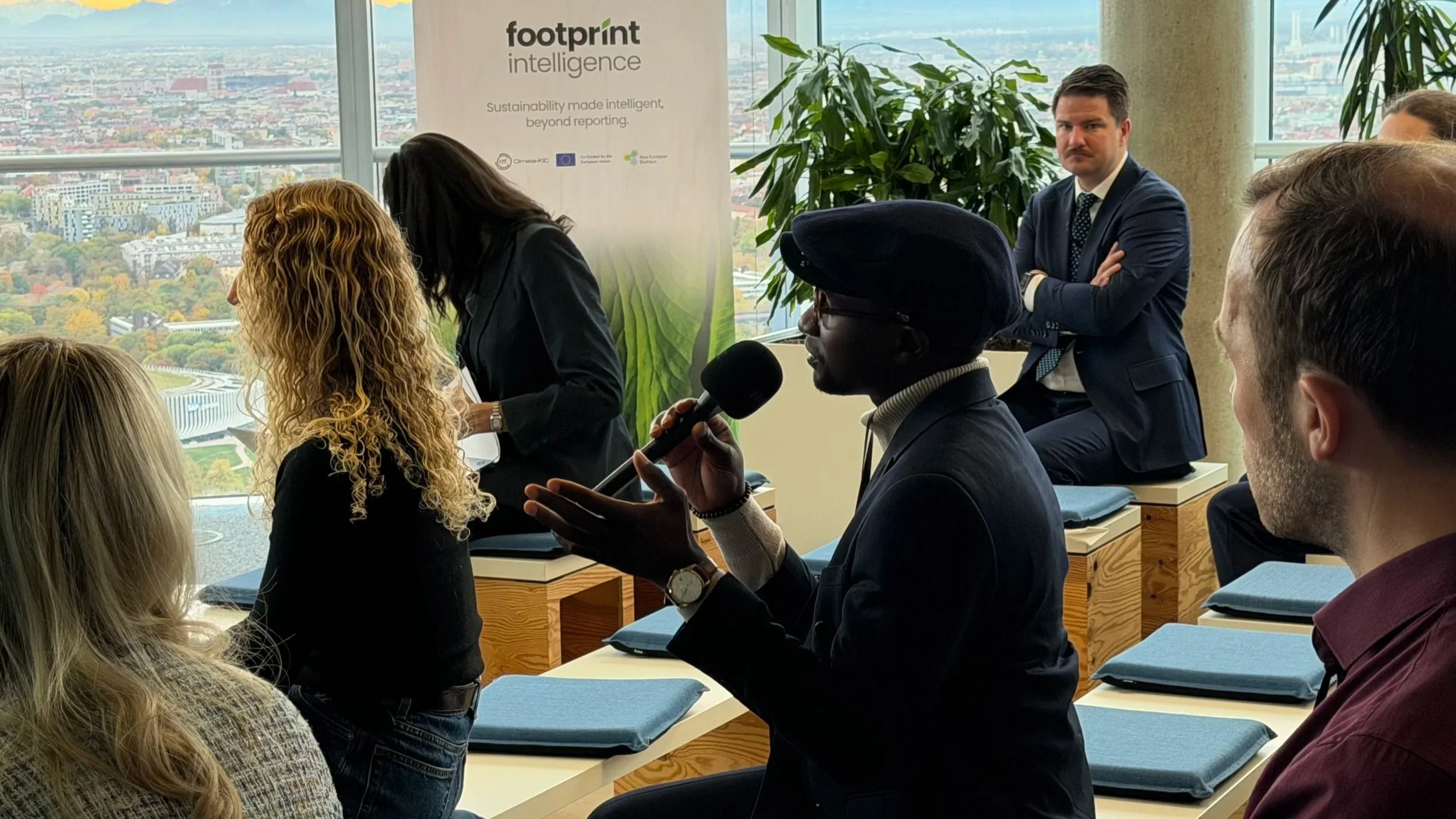
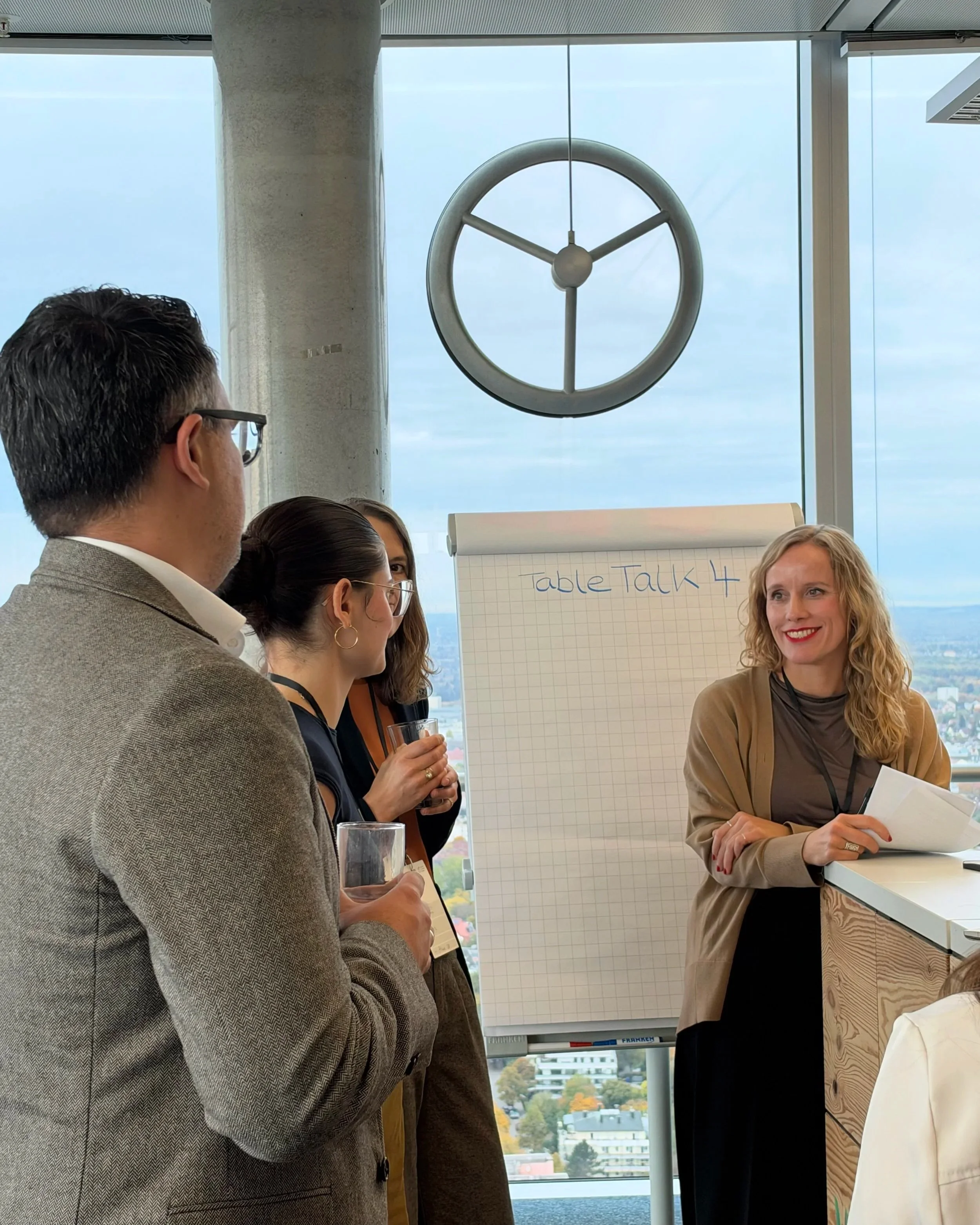
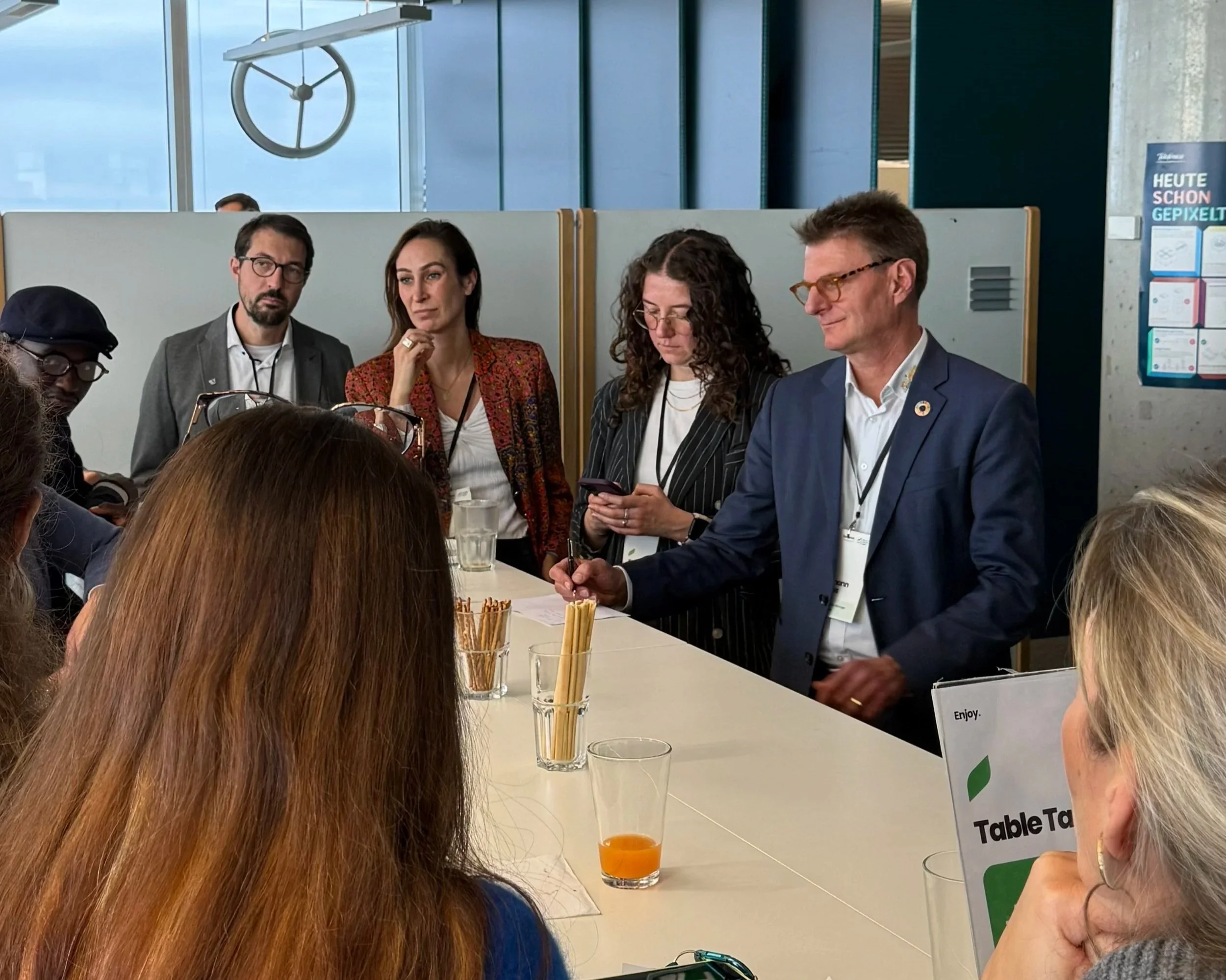
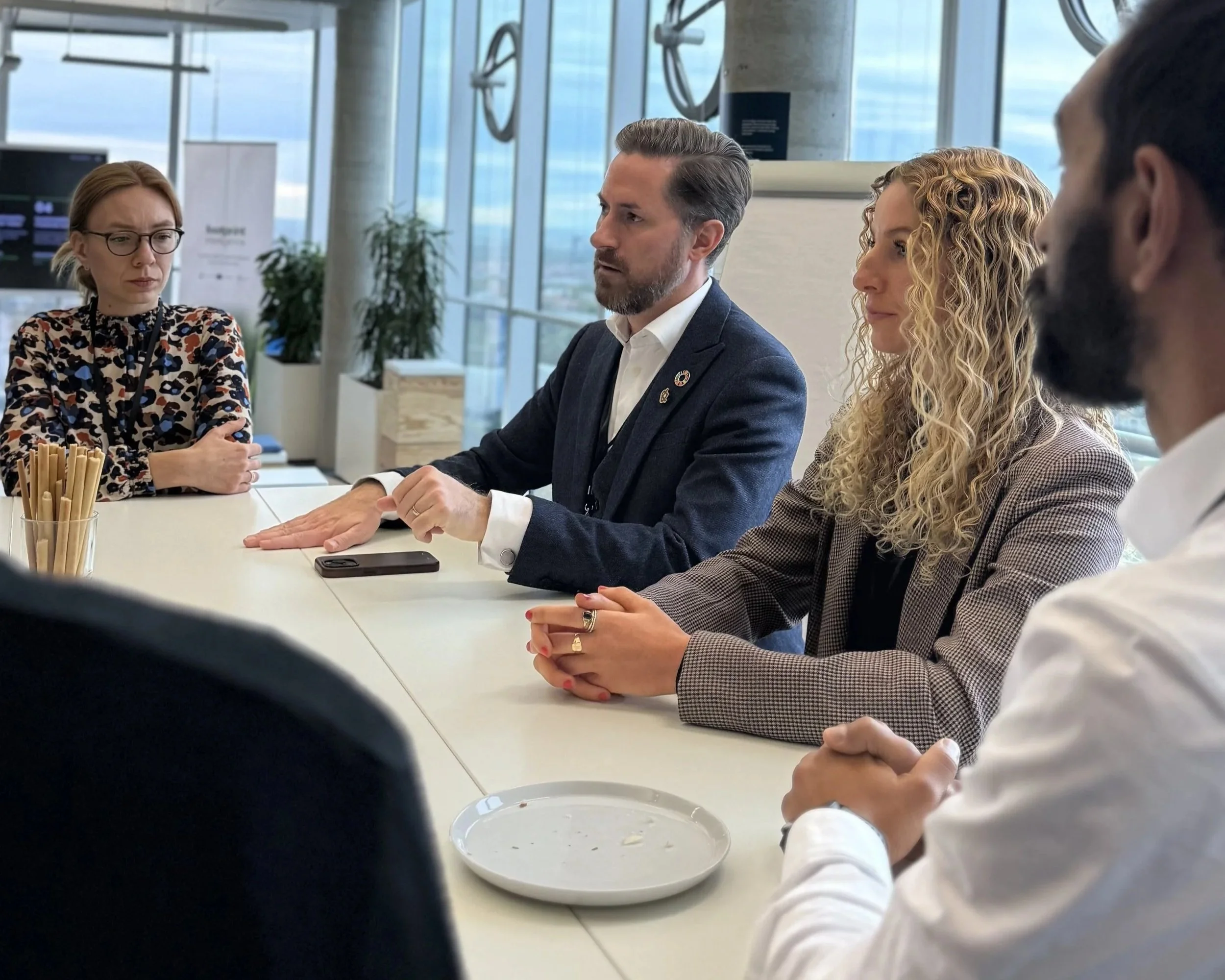
The interactive table talks created space to explore how these principles apply to specific challenges. One discussion, led by Markus Hermann, Global Sustainability Manager at Klüber Lubrication, focused on the relationship between sustainability, customer value, and business success.
His speaker reflection offered a memorable way of describing that relationship:
“Sustainability has been like a roller-coaster in the past decades - unfortunately. The closer you manage to create traditional business value, like efficiency, reliability or profit, the smoother your ride. Just like if you used specialty lubricants.”
This observation is useful because it encourages specificity.
A customer may value lower energy consumption, longer equipment life, reduced maintenance, fewer interruptions, or more efficient use of materials. Sustainability becomes commercially relevant when those benefits are understood, demonstrated, and connected to the customer’s priorities.
That requires close cooperation between sustainability, product, technical, and sales teams. It also requires evidence: what changes for the customer, how that change is measured, and which assumptions support the calculation.
The strongest value proposition will depend on the application. Developing it starts with understanding the customer’s business.
Bringing Digital Transformation and Sustainability into the Same Decisions
Another table discussion, hosted by Rainer Karcher, Founder & CEO, and Anthea Wagner, Twin Transformation Expert, both at Heartprint, explored twin transformation: the relationship between digitalization and sustainability.
Anthea described the leadership relevance in her reflection:
“As AI, climate change, technology’s resource consumption, social impacts, geopolitical risks and dependencies increasingly intersect, sustainability needs a seat at the table whenever organizations introduce AI, choose technologies or procure systems.”
This has direct implications for how companies make decisions. Technology choices can influence electricity demand, infrastructure requirements, supplier dependencies, and operating costs. At the same time, digital tools can help organizations improve visibility, analyze options, and operate more efficiently.
The IEA’s 2026 Key Questions on Energy and AI report illustrates the scale of the connection. It projects global electricity consumption by data centers to rise from 485 TWh in 2025 to around 950 TWh in 2030, almost doubling.
These projections reinforce the need to assess digital transformation in its physical and operational context. Choosing a technology involves questions about the value it creates, the resources it requires, and the dependencies it introduces.
Anthea’s also outlined the contribution sustainability can make to those decisions:
“Its role is to challenge assumptions, connect the dots and help turn complex interdependencies into resilient, responsible decisions.”
This captures the cross-functional capability companies need as technology and sustainability strategies become more closely connected.
Turning Targets and Transition Plans into Implementation
The other discussions explored two further dimensions of implementation.
Hasan Mawassi, Sustainability Manager at IONITY, led the discussion on SBTi in practice, focusing on translating climate targets into a cross-functional strategy. For companies, that means identifying relevant measures, assigning responsibilities, and understanding the investment and collaboration required.
Johanna Dichtl, Global Implementation Lead Banking at UNEP FI, explored how banks can align their transition plans with those of their clients to support change in the real economy.
Together, these discussions highlighted the importance of connecting targets and transition plans with operational responsibilities, financing, and cooperation across organizations.
Four Key Takeaways from Munich Climate Week
The morning brought four practical lessons into focus:
Sustainability data creates value when it changes a decision, whereas reporting provides a foundation. Its business value grows when teams use the information to prioritize investments, respond to customer needs, and assess risks.
A credible business case connects returns with resilience. Cost savings and customer value matter, alongside exposure to energy prices, supply constraints, and the consequences of postponing action. The economics differ across industries, making an honest assessment of trade-offs essential.
Implementation requires shared ownership. Leadership support, capabilities across business functions, and collaboration with customers and financial partners help translate targets into action. Sustainability becomes more effective when it is embedded in everyday responsibilities and decision-making processes.
Community helps turn individual experience into shared progress. Munich Climate Week created space for people across industries and business functions to connect. Our breakfast showed the value of that exchange: comparing approaches, discussing difficult trade-offs, and learning from challenges others have already faced. Those connections create opportunities for collaboration beyond the event.
For us, these lessons reinforce the importance of connecting reliable sustainability data with practical action and measurable progress.
Thank you to all participants, our speakers and table talk hosts, and the Munich Climate Week initiative for contributing their perspectives. We look forward to continuing the exchange and bringing this community together again at future events!