Turning Climate Risk into Business Resilience: Inside the EY x Footprint Intelligence Leadership Breakfast in Cologne
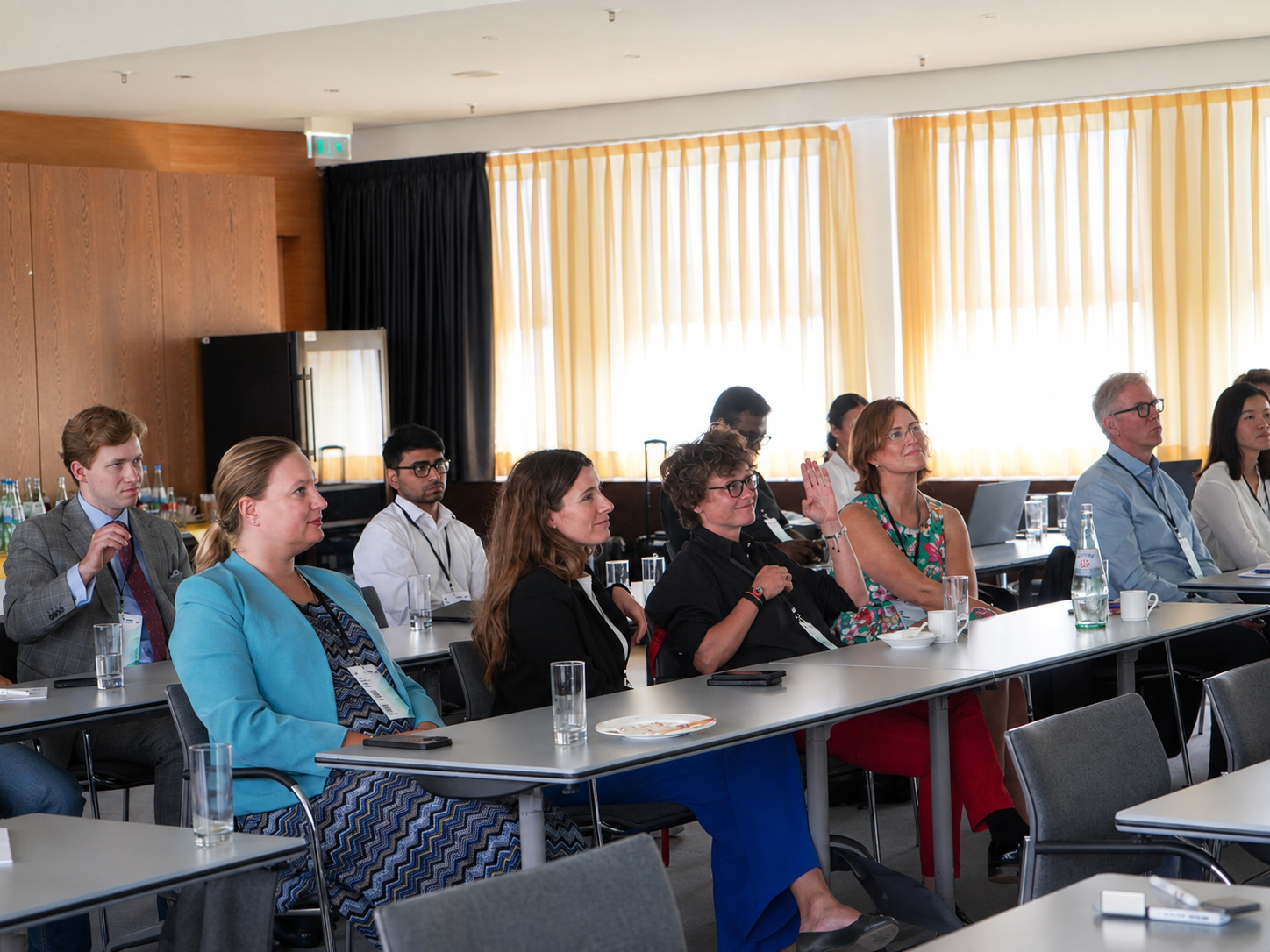
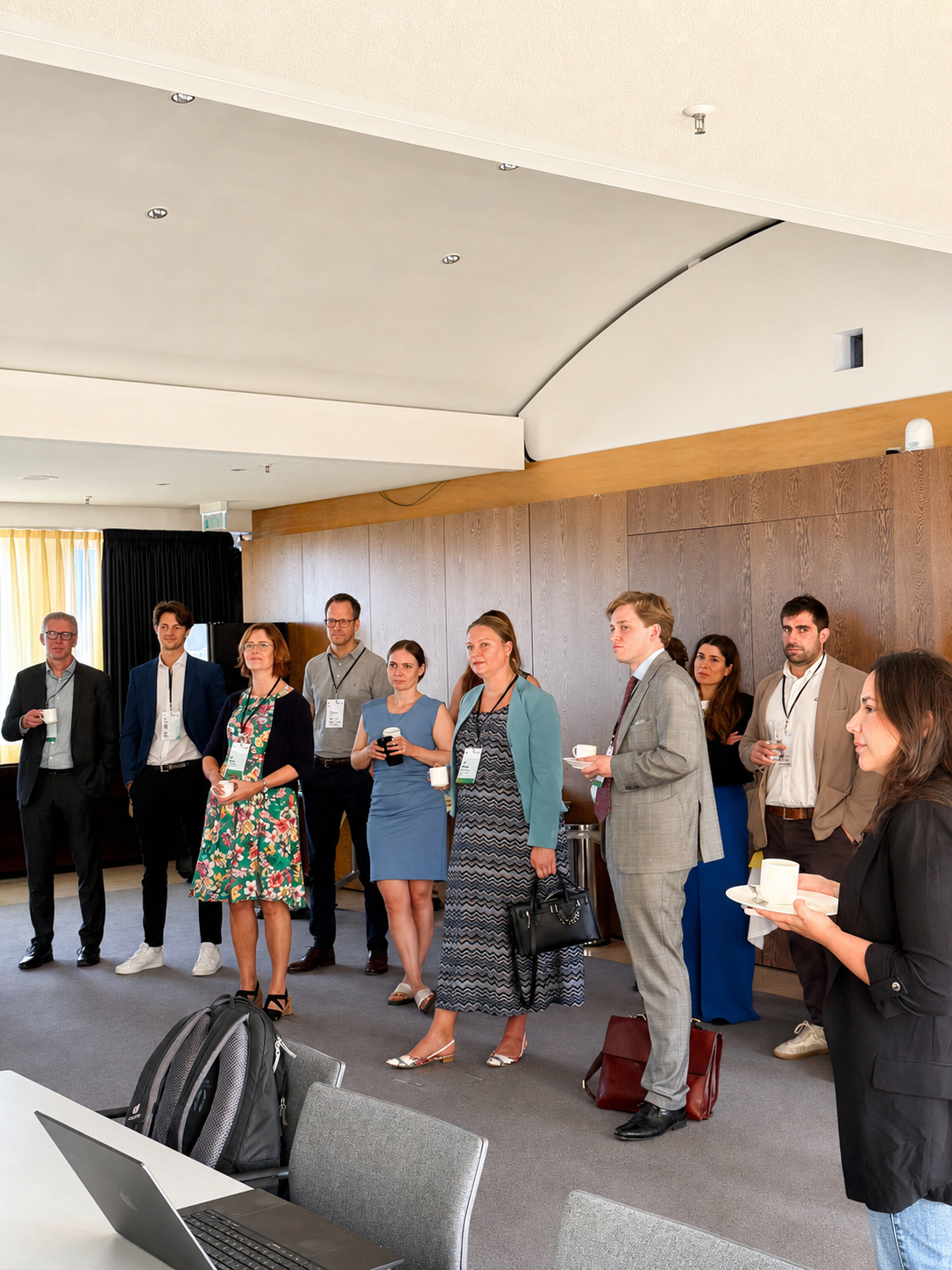
On the morning of July 16, sustainability and business leaders gathered in Cologne for a working breakfast built around scenario thinking, honest conversation and a shared question: what actually moves the needle on corporate sustainability transformation.
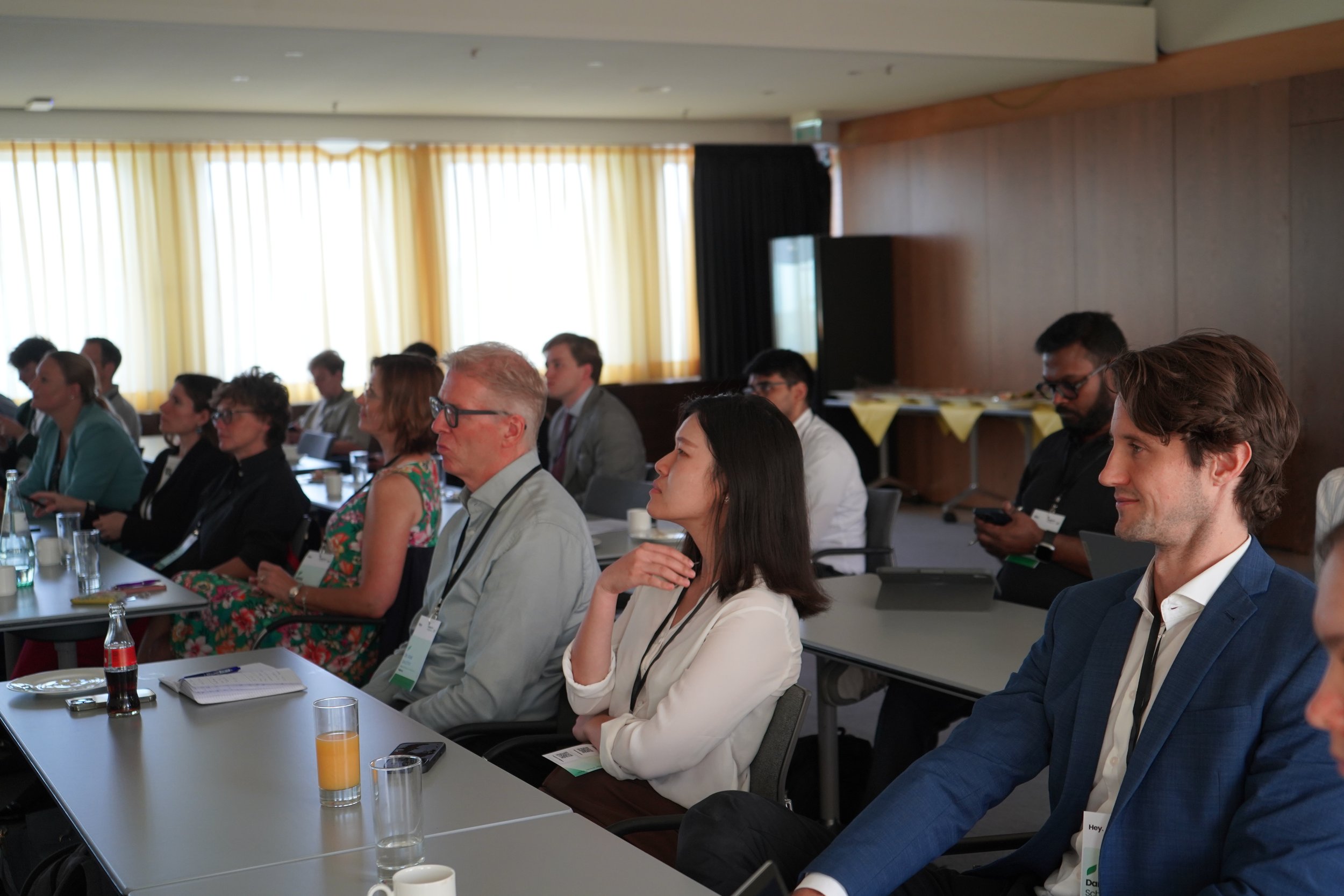
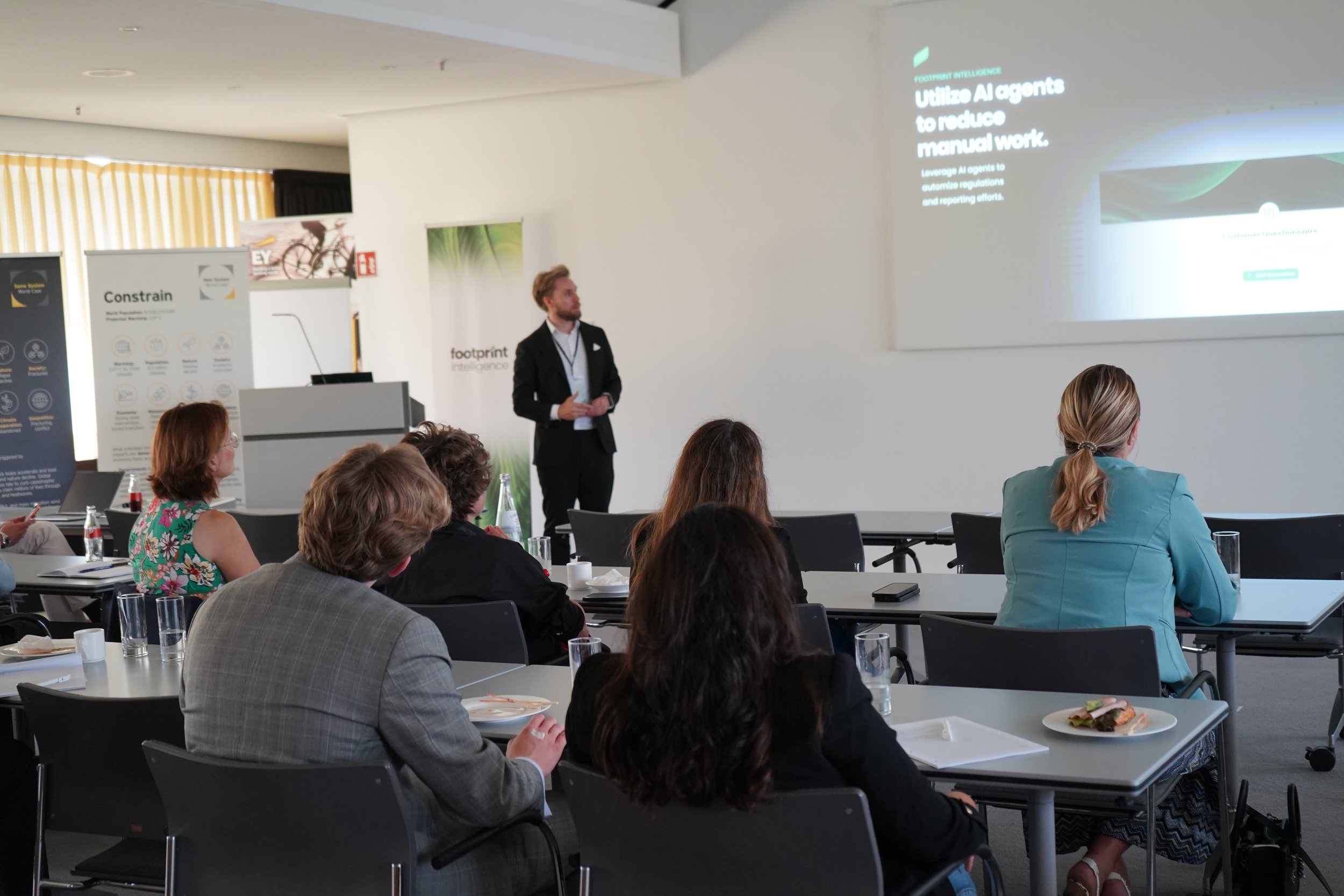
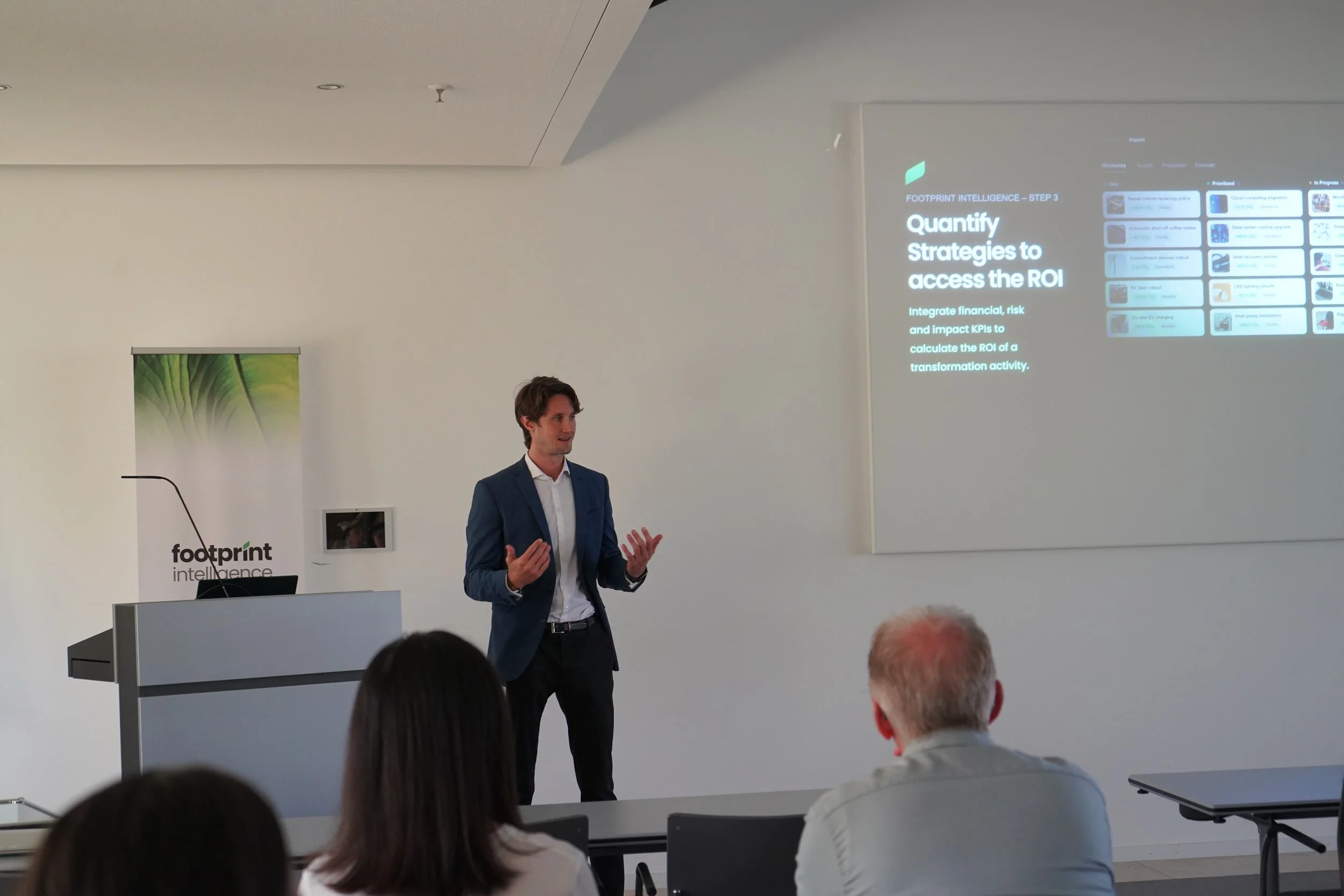
The event was a joint initiative by EY and Footprint Intelligence, combining EY’s immersive Four Futures experience with Footprint Intelligence’s data-driven impact tools. The morning began with EY guiding participants through four radically different climate futures for 2055, encouraging them to explore how decisions made today could shape businesses, societies, resources and geopolitics over the coming decades. From there, the conversation moved between long-term strategic foresight and the practical challenges organizations face when translating climate strategies into concrete action. Throughout the event, participants were actively involved through thought-provoking questions, open discussions and collaborative exchanges. EY then explored climate transition planning as a strategic consulting discipline, before Footprint Intelligence concluded the session with an introduction to its platform, illustrating how a transition plan can be translated into practical actions that teams can implement, measure and continuously improve over time.
What made the session valuable was the quality and candor of a genuinely cross industry exchange, in a format small enough that people spoke openly about what is still not working, rather than reciting the version of the story that usually goes into an annual report.
A Cross-Industry Room
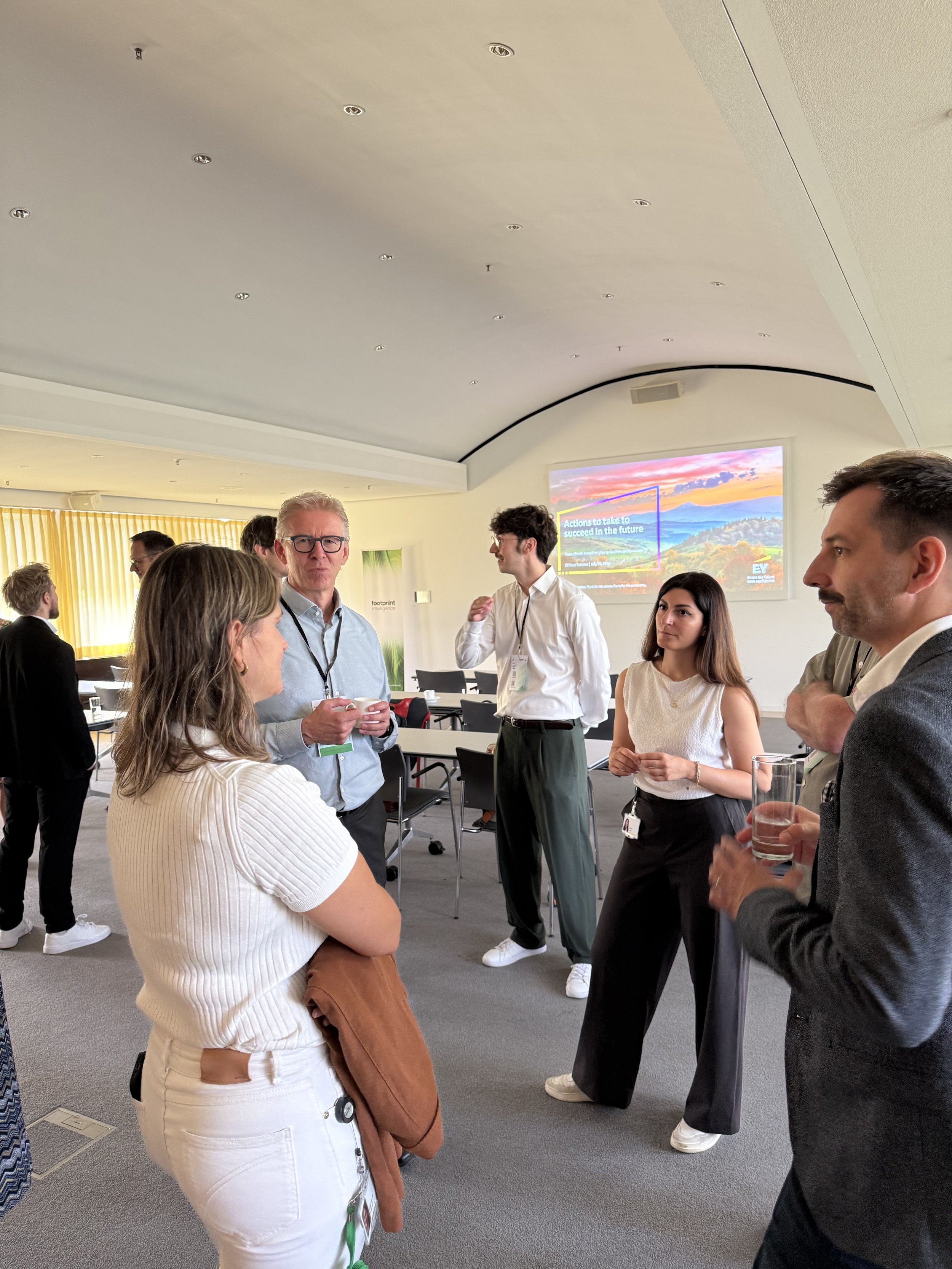
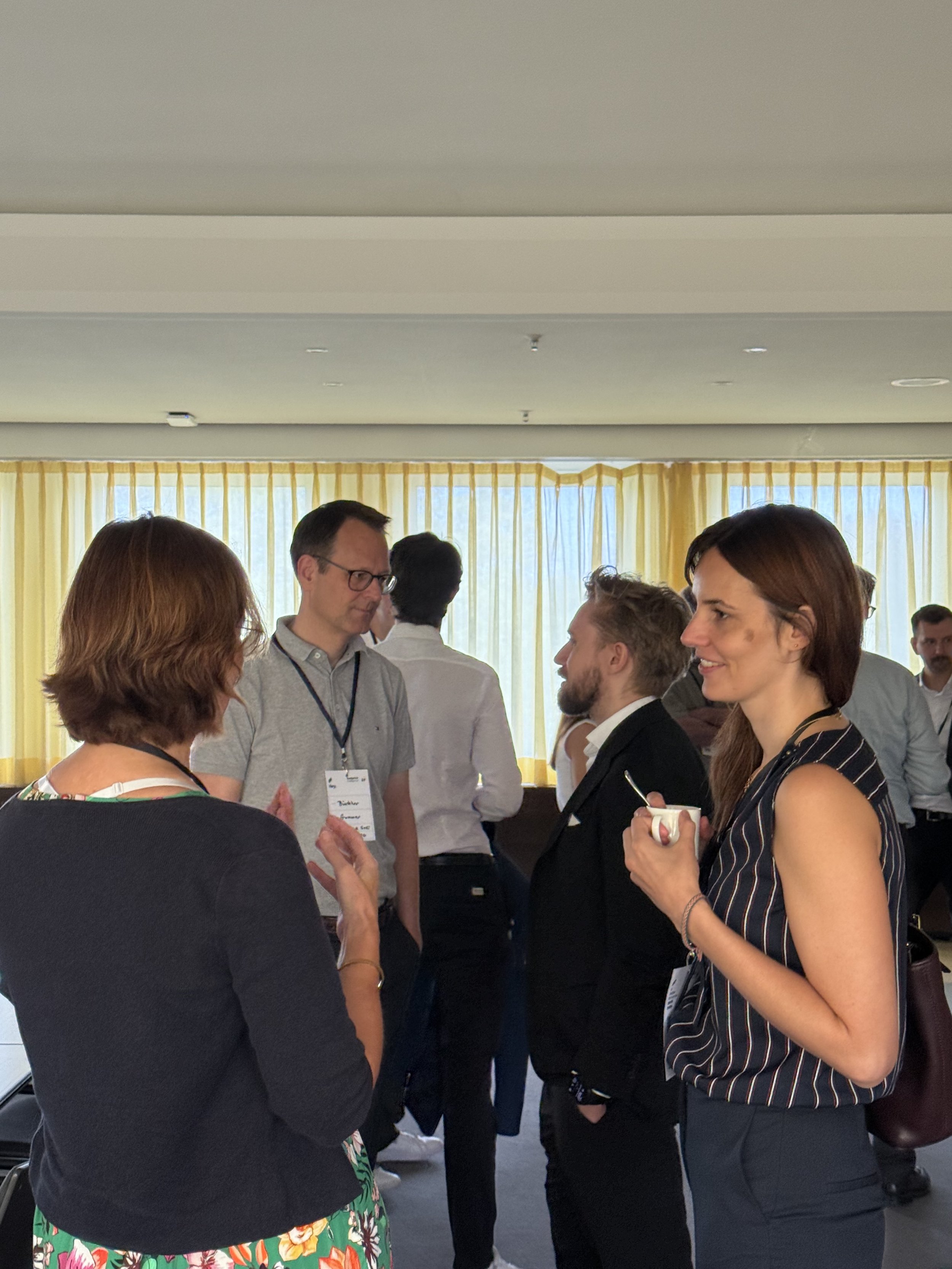
One of the most striking things about the morning was the sheer diversity of industries represented in the room. Participants came from construction and infrastructure, automotive component and interior supply, chemicals and advanced materials, financial services and insurance, retail, logistics, consumer goods, healthcare, supply chain services and international climate governance.
Bringing that many sectors into one room is rare, and it turned out to be the point of the format. A transition plan looks entirely different from inside a chemicals plant than it does from inside a bank's loan book or an insurer's underwriting department. Rather than smoothing those differences into generic advice, the morning let people hear directly how colleagues in adjacent industries approach problems that look similar on paper but demand very different solutions in practice.
A Brief Look Ahead to 2055
The morning opened with EY's Four Futures Experience, an immersive, AI visualized installation that walks participants through four contrasting scenarios for the world in 2055. The scenarios are grounded in climate science and developed with academic input and they range from gradual adaptation under continued warming to more disruptive paths involving supply chain shocks, resource constraints, or a genuine shift toward a circular economy. Rather than delivering a single forecast, the experience makes the consequences of today's decisions on climate, geopolitics, resources and society tangible thirty years out, turning what is usually an abstract data point into something closer to a felt experience.
The workshop quickly moved from long-horizon scenario thinking to the much more immediate question of what stops companies from acting today.
From Transition Plan to Business Performance
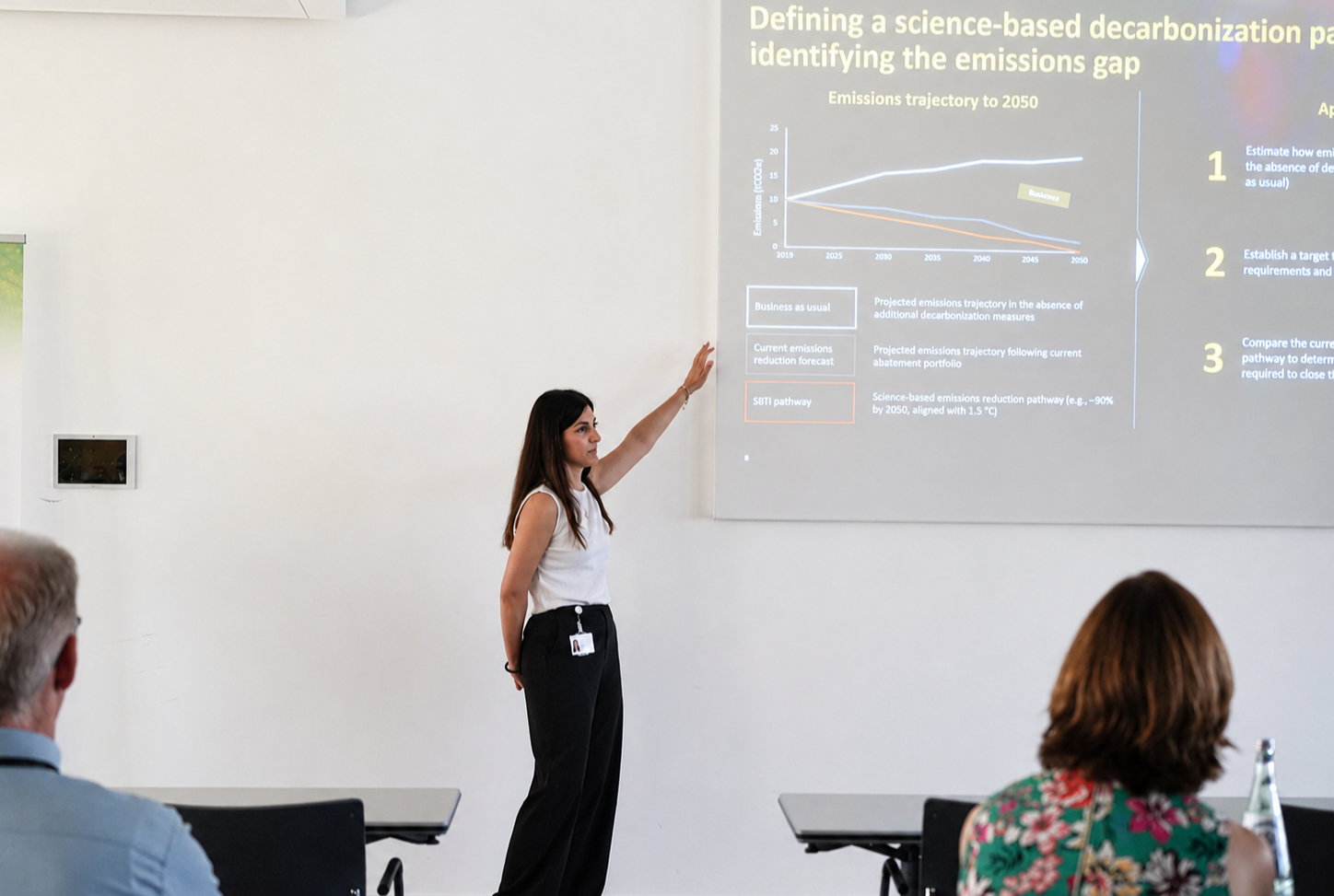
EY’s subsequent presentation shifted from scenario thinking to the practical discipline of climate transition planning, built around one central idea: a transition plan creates value only when it influences business performance, not merely sustainability reporting.
A credible plan requires clear governance, measurable emissions targets,, defined decarbonization levers and a realistic path toward more sustainable products and services. It must also explain how implementation will be funded and which assumptions and dependencies underpin the plan.
Challenges differ significantly across business units, making top-down implementation difficult. Securing the right internal stakeholders and motivating them was seen as more important than technical analysis alone. Time, cost, limited resources, and the difficulty of translating climate measures into finance-ready business cases often prevent action. Participants also noted that while many low-cost measures are available today, more ambitious reductions may depend on technologies that are not yet mature or scalable.
EY’s 2025 Global Climate Action Barometer highlighted the same implementation gap. Although 64 percent of companies have some form of transition plan, most report no measurable progress, while some are reversing previous commitments. Among companies with net-zero ambitions, 69 percent target 2050, but only around one-third have a genuinely actionable plan. Scope 3 emissions remain a particular challenge.
Making Impact Measurable
Where EY’s session established the strategic logic of a transition plan, Footprint Intelligence demonstrated how that logic can be translated into a practical platform that integrates business intelligence with strategic and sustainable transformation.
The session began by distinguishing between time spent on data collection and reporting and time dedicated to impact and transformation. Much of today’s sustainability work still revolves around gathering, cleaning and disclosing data. While this work is necessary, it does not in itself deliver change. Artificial intelligence can reduce the administrative burden, freeing up time and resources to identify, evaluate and implement the measures that create the greatest value.
The platform follows a structured process, beginning with stakeholder identification. Successful transformation requires the involvement of functions such as supply chain, legal, sales, risk, marketing, finance and product. Potential measures are then assessed through Footprint Intelligence’s Impact Framework, which brings together three complementary perspectives: Financials, Risk and Sustainability.
The Financials dimension considers the initial investment required, additional operating costs, potential cost savings, revenue opportunities, payback periods and return on investment. Risk captures factors such as regulatory and compliance exposure, energy and resource price volatility, supply-chain disruption, carbon pricing, customer and revenue risks, reputational considerations, and financing and insurance implications. Sustainability evaluates the environmental and social outcomes of each measure, including avoided emissions, reduced energy and water consumption, waste reduction, materials saved, biodiversity impacts and progress towards corporate sustainability targets. By combining these dimensions, the framework creates a more complete and decision-useful business case than an assessment based on cost or environmental impact alone.
Transformation ideas combine AI-supported benchmarking with the knowledge of internal teams. The platform recommends relevant strategies, while employees contribute the operational context needed to assess their feasibility and implementation requirements. Measures can then be quantified using financial, risk and sustainability indicators, including payback periods, annual value, resource savings and avoided emissions. Targets can be linked to science-based standards or a company’s own benchmarks, while dashboards track progress, assign ownership and move initiatives from prioritization through implementation to completion.
The platform can also build on existing reporting and compliance data, including CSRD disclosures, to strengthen projections and support tasks such as customer questionnaires and sustainability-rating submissions. In this way, information originally collected for disclosure can be reused to inform operational and strategic decisions.
The distinction between reporting and transformation reflected a wider tension raised by participants. Investors often prioritize comparability and disclosure, while customers are more interested in visible action. Several attendees emphasized the importance of translating sustainability into the language of each business function: procurement responds to cost and supply security, commercial teams to customer value, risk teams to exposure and resilience, and finance to measurable returns. A focused set of shared, decision-useful indicators was considered more effective than an extensive catalogue of metrics understood only by sustainability specialists.
What Actually Drives Transformation?
A shorter discussion tackled the question every sustainability leader eventually has to ask: which pressures genuinely move companies to act, beyond the obligations that come from reporting frameworks.
One perspective highlighted several possible levers, including market pressure, lending and financing conditions, insurance requirements, climate-driven product innovation, and asset managers’ interest in the long-term resilience of their portfolios. Yet the discussion repeatedly returned to one central point: none of these levers is likely to have much impact without a credible, well-quantified business case. Companies are more likely to act decisively when they can see, in concrete terms, how a measure creates economic value alongside climate value.
There was real candor in the room about where that pressure currently is, and where it is not, coming from. Several participants felt that market and capital-market pressure has softened recently, with a shared perception that sustainability requirements are being scaled back in some markets, particularly in the United States. Innovative projects, concrete customer demands, and a supervisory board that actively backs the sustainability agenda were named as more reliable drivers right now than broad market sentiment. Banks were described as something of an exception, still operating under meaningful and largely unchanged regulatory pressure. From the insurance side of the room came an important closing nuance: simply excluding carbon-intensive sectors such as chemicals from a portfolio is not, by itself, a transformation strategy. Many companies in those harder-to-decarbonize sectors clearly see the problem in front of them. What is often still missing is a credible, financeable path to solving it.
Key Takeaways for Leaders
A handful of themes ran through the entire morning and cut across every industry in the room:
Prioritization matters more than ambition alone. A long list of technically feasible measures is less useful than a clear ranking of what each measure costs, what it delivers and how it contributes to the wider business.
Start with the data you already have. Before setting additional targets or introducing new metrics, organizations should understand what data already exists, where the genuine gaps are and which information is actually relevant for decision-making.
Translate sustainability into the language of each business function. Procurement responds to cost and supply security, finance to returns and risk, and customer-facing teams to market demand and customer value.
Build a credible, quantified business case. Concrete evidence of financial, strategic and sustainability value is more likely to unlock action than a top-down mandate alone.
Use regulation as a catalyst, not as the end goal. Regulatory pressure can create urgency, but it is most effective when companies also understand how the resulting data and plans will support decisions and implementation.
Involve the right stakeholders from the outset. Supply chain, legal, sales, risk, marketing, finance and product teams each hold essential parts of the transformation that sustainability teams cannot deliver alone.
Treat reporting and transformation as distinct but connected workstreams. Reporting demonstrates performance and compliance, while transformation focuses on implementing measures and delivering measurable change.
Create one consolidated view of impact. Tools and frameworks that benchmark, quantify and track financial, risk and sustainability outcomes help leaders compare initiatives, set priorities and move from scattered ideas to coordinated action.
Looking Ahead
What made this Cologne morning distinctive was the way scenario thinking, consulting methodology and working software were presented back-to-back, each addressing a different piece of the same problem. EY's opening exercise gave the room a long horizon to reason from, its transition plan session gave that horizon a disciplined, cost-aware structure, and Footprint Intelligence's solution showed how that structure can live inside a tool a team actually opens every week rather than once a year at reporting time.
As decarbonization enters its harder, less low-hanging phase across every sector represented in that room, mornings like this one, specific, grounded in real data, and honest about where the barriers still sit, are exactly what the sustainability community needs more of.
Footprint Intelligence and EY plan to continue this format with future leadership sessions. Get in touch to hear about upcoming events.